



Spinal Injury Care at Home in Wolverhampton
Spinal injury care at home in Wolverhampton from Lifetouch Care is planned and led by registered nurses, giving people with a spinal cord injury, and their families, safe and consistent care in their own home.
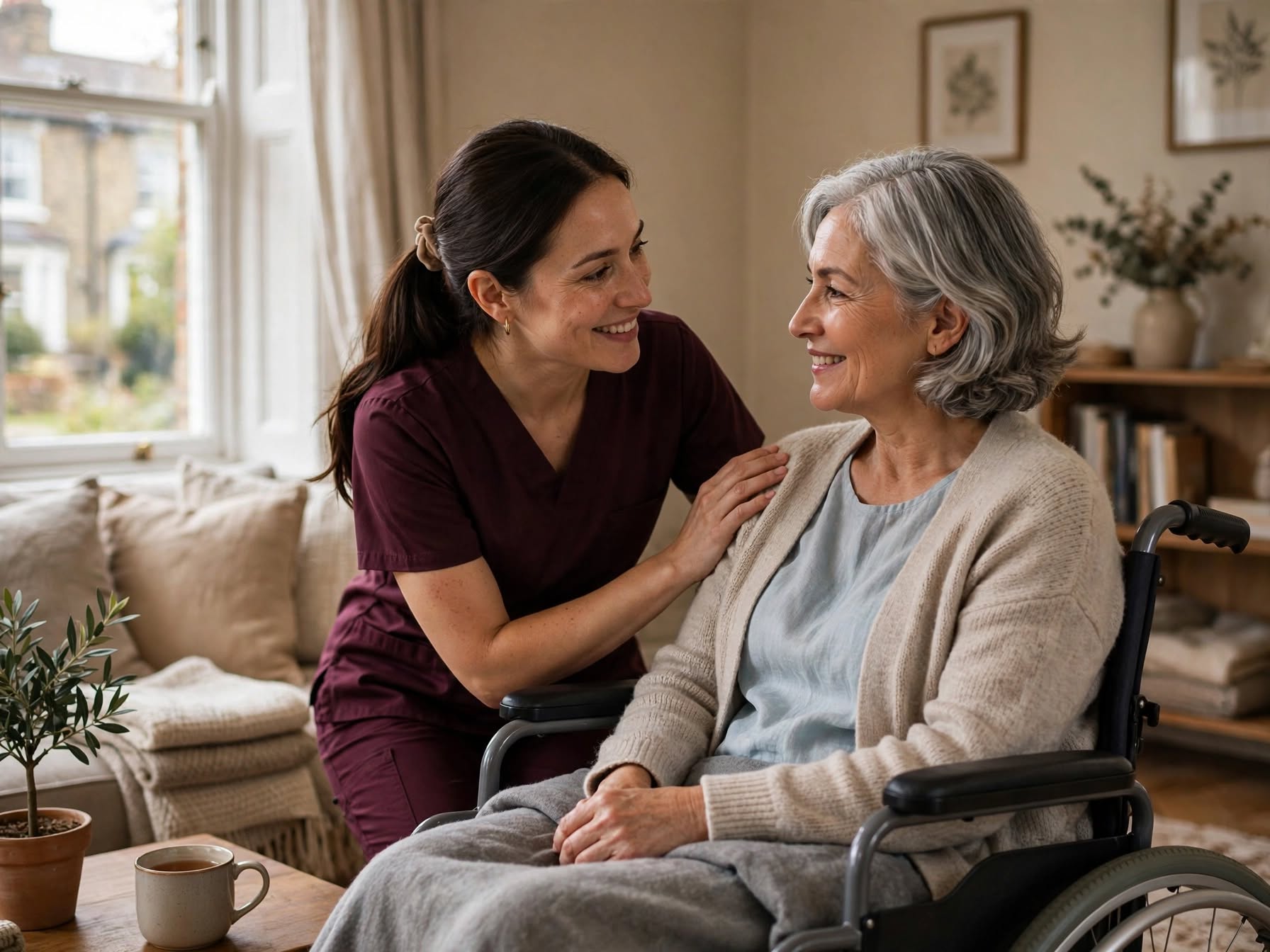
Understanding spinal injury care at home in Wolverhampton
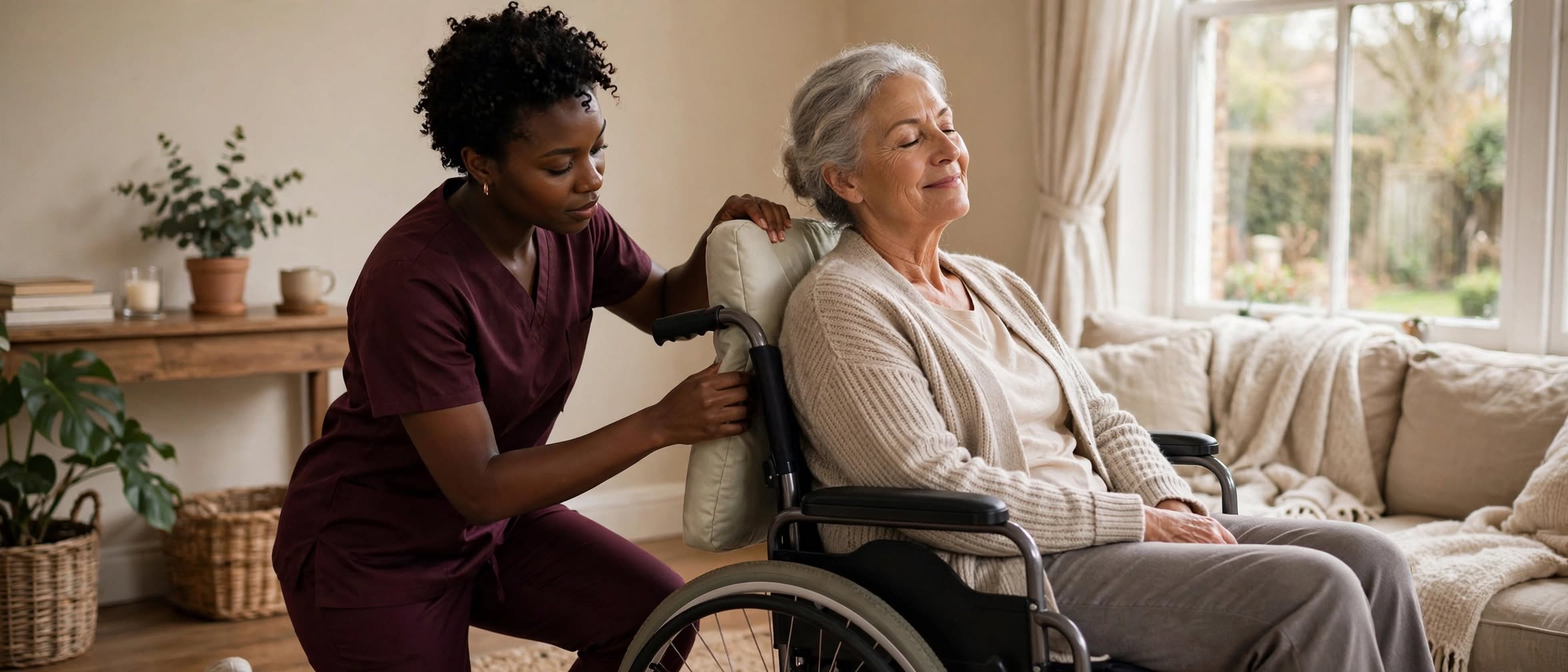
What is spinal injury care at home?
Spinal injury care at home is specialised clinical and personal support for individuals living with spinal cord injuries or spinal trauma that affects mobility, independence, and daily living. This type of care involves mobility assistance, personal care support, rehabilitation assistance, continence care, pressure sore prevention, medication management, and ongoing healthcare monitoring within the home environment.
Unlike standard domiciliary care, spinal injury care at home in Wolverhampton needs clinical oversight and specialist training to safely manage transfers and positioning, breathing, continence and long-term rehabilitation. That is why every Lifetouch Care package is led by an NMC-registered nurse through our nurse-led care model.
Spinal cord injuries are usually described by their level and completeness. A cervical (neck) injury can result in tetraplegia, affecting movement and sensation in the arms, hands, trunk and legs, while a thoracic or lumbar injury more often causes paraplegia, affecting the trunk and legs. An injury may also be complete, with no function below the level of injury, or incomplete, where some sensation or movement remains. The level and completeness of injury shape the exact mix of clinical and personal support a person needs at home, from full nursing oversight to lighter-touch reablement support.
People who need spinal injury care at home in Wolverhampton are often recovering from traumatic injuries, accidents, neurological conditions, surgery, or long-term spinal disorders. Receiving professional care at home allows individuals to remain comfortable in familiar surroundings while promoting independence, dignity, and quality of life — often alongside NHS or community rehabilitation teams already involved in a person’s care.
Who benefits from spinal injury care at home in Wolverhampton?
- Individuals recovering after spinal injury hospital treatment
- Adults living with spinal cord injuries
- Adults living with paralysis or reduced mobility
- People requiring catheter and continence support
- Individuals needing pressure sore prevention care
Mobility & transfers
Safe use of hoists, slide sheets and wheelchairs, with careful repositioning to protect joints and skin.
Pressure area & skin care
Regular skin checks and repositioning schedules that reduce the risk of pressure sores. See our wound and pressure care.
Bladder & bowel management
Structured bowel routines and catheter care where needed, to support comfort and dignity.
Spasticity & pain management
Monitoring muscle tone and pain, and supporting prescribed medication and positioning routines.
Respiratory support
Monitoring breathing and, for higher-level injuries, tracheostomy and ventilator care.
Medication management
Administering and monitoring medication safely, in line with the person’s care plan.
Rehabilitation liaison
Working alongside physiotherapists, occupational therapists and other specialists on rehabilitation goals.
Emotional & psychological support
Recognising the emotional impact of spinal injury, with consistent, familiar support for the person and their family.
Autonomic dysreflexia: a spinal injury emergency our Wolverhampton teams know
Autonomic dysreflexia (AD) is one of the most serious complications associated with spinal cord injury, and recognising it quickly is a core part of safe spinal injury care at home in Wolverhampton. Each person’s care plan records their usual blood pressure and exactly what to do.
A sudden, dangerous spike in blood pressure, triggered by a stimulus below the level of injury — often something as ordinary as a full bladder. It occurs mostly in people with a spinal cord injury at or above the sixth thoracic vertebra (T6), and is a medical emergency that needs an immediate response.
Common triggers
- A full or blocked bladder — including a blocked or kinked catheter
- A full bowel or constipation
- Skin irritation — pressure sores, tight clothing, or an ingrown toenail
- Other painful or irritating stimuli below the level of injury that may not otherwise be felt
Signs to watch for
- A sudden, pounding headache
- A sudden rise in blood pressure
- Flushed or blotchy skin, and sweating, above the level of injury
- Goosebumps, and a slower heart rate, below the level of injury
- Blurred vision, nasal congestion, or a sense that something is wrong
How our nurse-led teams respond
On every package of spinal injury care at home in Wolverhampton, our nurses and trained carers are taught to recognise the early signs of autonomic dysreflexia and respond immediately — sitting the person upright to help lower blood pressure, loosening any tight clothing, and checking for and addressing the most common triggers first, starting with the bladder and catheter. Blood pressure is monitored throughout, and if symptoms don’t settle quickly, emergency help is called on 999 without delay.
Spinal injury care at home in Wolverhampton: our services
Every care package is planned and led by registered nurses, built around the person, their family, and their goals.
Spinal cord injury care
Our core service: tailored, one-to-one spinal injury care at home in Wolverhampton, covering mobility and positioning, pressure area care, bladder and bowel management, and rehabilitation goals.
Complex clinical care
Tracheostomy care, ventilator support, PEG and enteral feeding, catheter care, wound management, and medication administration, delivered safely at home. Read more about complex care in Wolverhampton.
Nurse-led care teams
Every package is designed and overseen by a registered nurse, working closely with case managers, GPs and specialist clinicians to keep care consistent and clinically sound.
24-hour & live-in care
Flexible care packages, from a few hours a week to full 24-hour and live-in nursing care, so support grows or steps back as needed. See live-in care and respite care.
How to arrange spinal injury care at home in Wolverhampton
Many people come to us as they get ready to leave hospital. We can join hospital discharge planning so a trained team is in place on the day they come home.
Talk to a nurse
You, a case manager or a hospital discharge team call us to talk through needs, hours and funding.
Nurse assessment
A nurse meets the person at home in Wolverhampton, or on the ward at New Cross Hospital or West Park before discharge.
A written care plan
Agreed with the person, family and clinical team, including an autonomic dysreflexia plan where needed.
A trained, steady team
We recruit and train a small team, with every clinical skill signed off by a nurse.
Regular reviews
One and two weeks after care starts, then at least monthly, or sooner if needs change.
Paying for spinal injury care
Care is usually funded through NHS Continuing Healthcare, a personal health budget, City of Wolverhampton Council adult social care or an injury claim managed by a case manager. Some families pay privately. Our guide to complex home care costs explains more, and the Spinal Injuries Association offers free advice and peer support.
Our other care services
Lifetouch Care provides a full range of specialist home care services, all delivered by trained carers under the supervision of NMC-registered nurses.

“Complex and spinal injury care should feel like care from someone who knows you — not a rotating list of unfamiliar faces.” Every package of spinal injury care at home in Wolverhampton is led by a registered nurse from day one.
Spinal injury care at home in Wolverhampton: FAQs

What is nurse-led spinal injury care at home?
Nurse-led spinal injury care at home in Wolverhampton means every care plan is designed and overseen by a registered nurse, not just carried out by a general carer. At Lifetouch Care this covers mobility and positioning, pressure area care, bladder and bowel management, and rehabilitation support, delivered in the person’s own home in Wolverhampton and the surrounding West Midlands.
Do you provide 24-hour and live-in care for complex needs?
Yes. Lifetouch Care packages are flexible, ranging from a few hours a week to full 24-hour and live-in care, so support can increase or reduce as needs change.
What complex clinical care can Lifetouch Care nurses provide at home?
Our nurse-led teams provide tracheostomy care, ventilator support, PEG and enteral feeding, catheter care, wound management and medication administration at home. Carers only take on a clinical task once a nurse has trained them and signed off their competency.
What is autonomic dysreflexia and how is it managed?
Autonomic dysreflexia is a sudden, dangerous spike in blood pressure triggered by a stimulus below the level of injury, such as a full bladder, and occurs mostly in people with a spinal cord injury at or above T6. It is a medical emergency. Our nurses and trained carers are taught to recognise the early signs, respond immediately, and call for emergency help if symptoms don’t settle quickly — see our autonomic dysreflexia guide above for more detail.
What other specialist care services does Lifetouch Care offer?
Alongside spinal injury and complex clinical care, our trained carers — supervised by NMC-registered nurses — also support tracheostomy care, ventilator care, nebulisation, catheter care, stoma care, IV therapy, complex end-of-life care, dementia care, mental health support, eating disorder support, physical disability support, sensory impairment support, and personal and daily living care.
Which areas do you cover?
We are based in Wolverhampton and cover the whole city, including Tettenhall, Penn, Bilston, Wednesfield and Bushbury. We also provide spinal injury care in Walsall. Contact us to check availability in your area.
How is spinal injury care at home funded?
Usually through NHS Continuing Healthcare, a personal health budget, City of Wolverhampton Council or an injury claim. Some families pay privately. We can talk you through the options.
Do you support children?
No. Our spinal injury care service is for adults aged 18 and over.
How do I arrange spinal injury care at home in Wolverhampton?
Call 01902 544824 or email jacob@lifetouchcare.co.uk. A nurse will talk through what is needed and arrange an assessment at home or on the ward.
Spinal injury care at home in Wolverhampton and nearby towns
Our office is on Windmill Lane in Wolverhampton (WV3), so the nurses leading your spinal injury care at home in Wolverhampton are close by for assessments, reviews and support when things change. We care for people across the city, including Tettenhall, Penn, Bilston, Wednesfield, Bushbury, Fallings Park and Whitmore Reans.
We work alongside The Royal Wolverhampton NHS Trust, including discharge teams at New Cross Hospital and West Park Rehabilitation Hospital, and community nurses, GPs and therapists. Nearby, we also provide spinal injury care in Walsall, Dudley, Telford and Birmingham.
Check coverage in your areaTalk to us about spinal injury care at home in Wolverhampton
Whether you’re planning care for a family member or you’re a case manager looking for a nurse-led provider in Wolverhampton, we’re happy to talk through what’s needed. You can also use our contact form. Lifetouch Care is registered with the Care Quality Commission.