



Nurse-led care at home after a spinal cord injury, planned around the life you want
Spinal injury care in Birmingham from LifeTouch Care gives people with a spinal cord injury a registered nurse who plans and oversees their care, and a steady team of carers trained in their own routines.
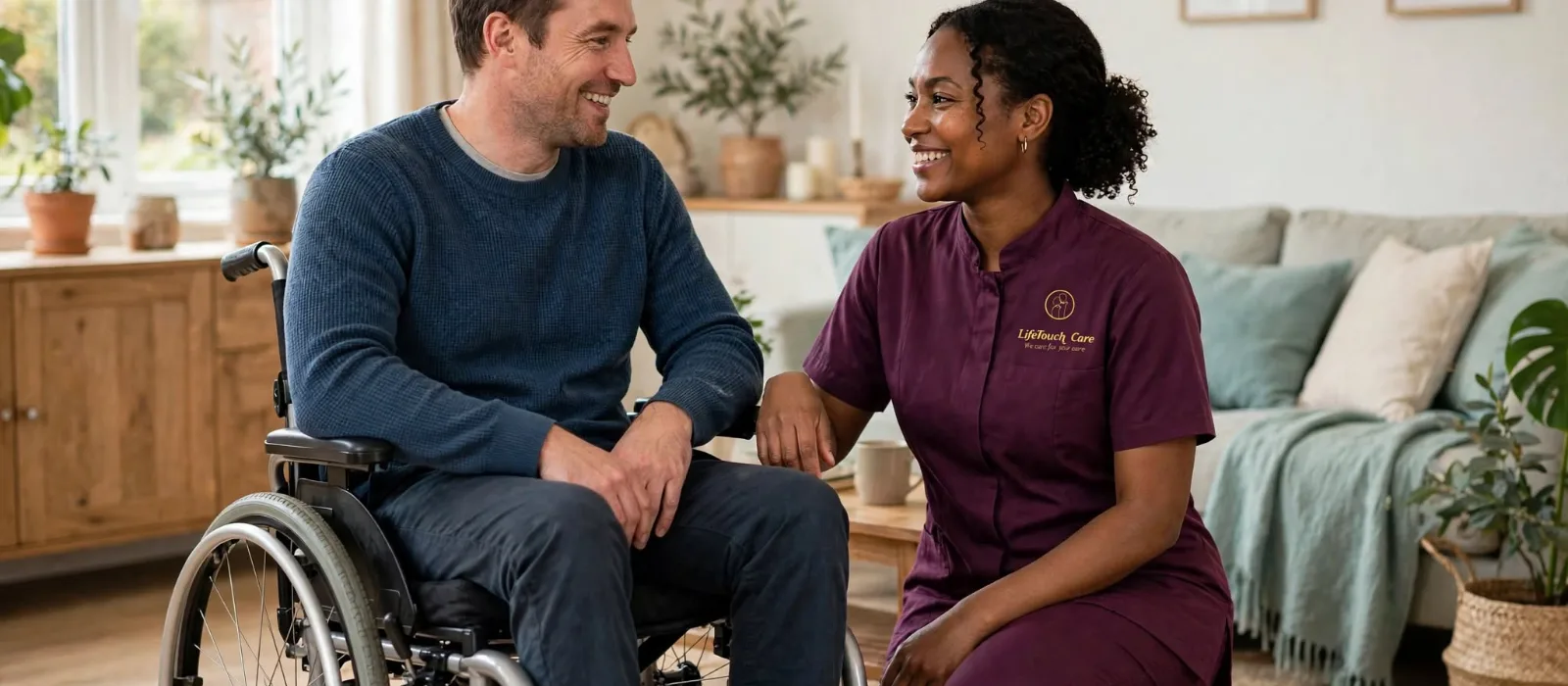
A spinal cord injury can change how someone moves, feels, breathes and manages their bladder and bowel. How much depends on the level of the injury, from the neck (often tetraplegia) to the lower back (often paraplegia), and on whether it is complete or incomplete.
So spinal injury care in Birmingham with LifeTouch Care always begins with a registered nurse. They meet the person and family, read the plans from the hospital, spinal team and therapists, then write a care plan covering every clinical task, every risk and what to do in an emergency.
The nurse then builds and trains a small team, and stays involved with regular reviews as needs change.

Safe transfers, positioning and wheelchair use, as set out by therapists.
Reduced feeling means pressure sores can start unnoticed, so skin is checked often.
Catheters and planned bowel routines, carried out with dignity.
Higher injuries may need cough assist, a tracheostomy or a ventilator.
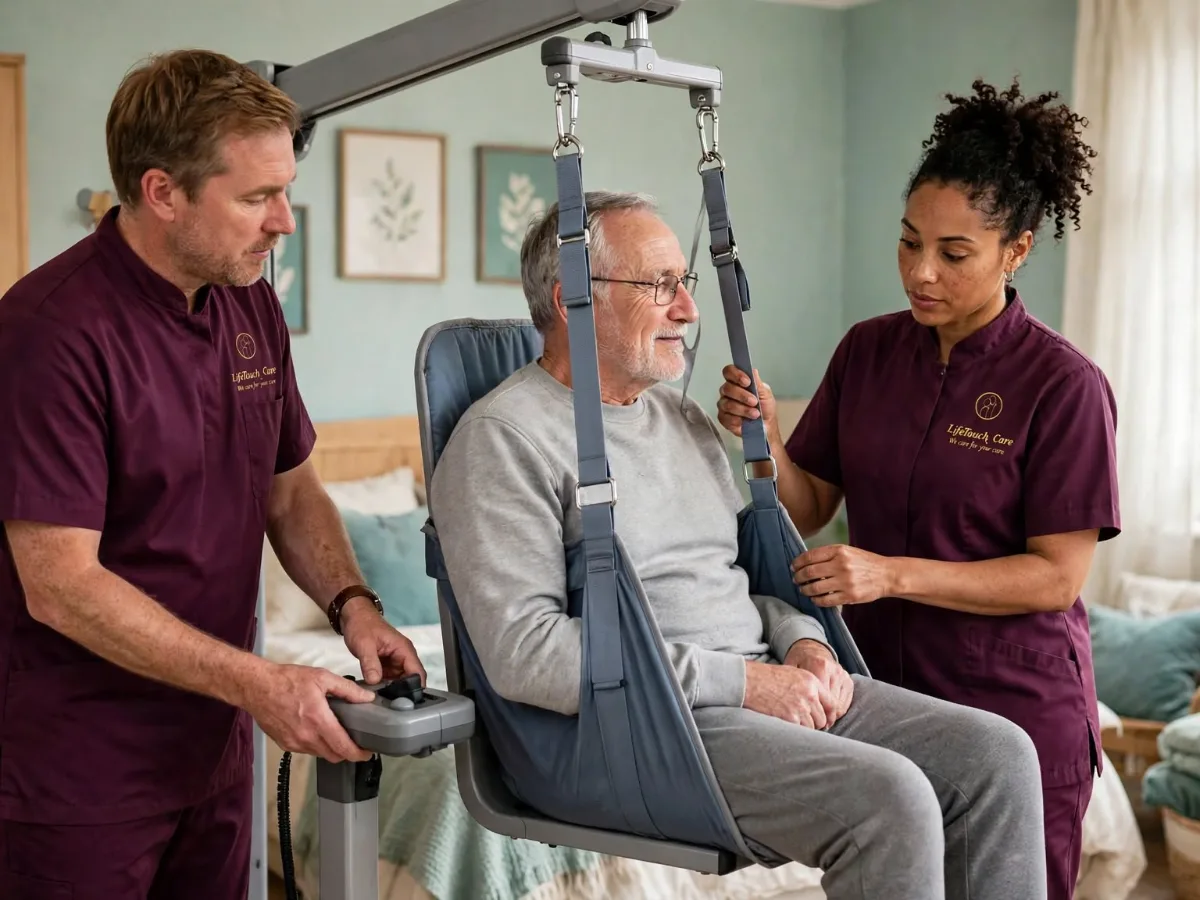
Every plan is different. This is an example of how our teams might support someone through the day.
Skin check, personal care, bowel routine if planned, then a hoist or board transfer into the wheelchair.
Intermittent or indwelling catheter care, medicines on a digital chart, and pressure relief while sitting.
Physio exercises, appointments, work, shopping or time with friends around the city.
Meal support, personal care and positioning in bed to protect skin and ease spasm, backed by our pressure care team.
Turns, catheter checks, and for higher injuries tracheostomy care or ventilator care.
Care can be a few visits a day, waking nights or full live-in care.
Autonomic dysreflexia (AD) is a sudden, dangerous spike in blood pressure triggered by a problem below the level of injury. It mostly affects people with an injury at T6 or above. Each person at risk has an AD plan with their normal blood pressure, and every carer on the team is trained in it.

Many people coming home after a spinal injury are discharged from the Queen Elizabeth Hospital’s major trauma centre or a regional spinal centre. We can join hospital discharge planning, and work closely with case managers and therapists.

We support people in homes across Birmingham. Call us to check your postcode.
These hospitals are run by University Hospitals Birmingham. We also work with Birmingham Community Healthcare community nurses and Birmingham City Council adult social care. Our office is in Wolverhampton, about 15 miles away, and the nurse leading your spinal injury care in Birmingham visits in person.
The Spinal Injuries Association offers free advice and peer support for people and families.
Clinical and personal care at home for adults living with a spinal cord injury, covering moving and handling, skin care, bladder and bowel care, breathing support, medicines and rehabilitation, planned and overseen by a registered nurse.
Yes. We provide anything from a few visits a week to 24-hour and live-in care, including waking nights, and adjust it as needs change.
Yes, once a nurse has trained them in the person’s own routine and signed off their competency. A nurse remains responsible for the care plan.
Carers sit the person upright with legs down, loosen tight clothing, check the bladder and catheter first, then the bowel and skin, and monitor blood pressure. They call 999 if it does not settle quickly.
Yes. A nurse can assess the person on the ward at the Queen Elizabeth, Heartlands or Good Hope hospitals and work with the discharge team so care is ready on day one.
Areas across the city including Sutton Coldfield, Erdington, Perry Barr, Handsworth, Edgbaston, Harborne, Selly Oak, Kings Heath, Northfield, Hall Green and Yardley. Call us to check your postcode.
No. Our spinal injury care service is for adults aged 18 and over.
Call 01902 544824 or email jacob@lifetouchcare.co.uk. A nurse will talk through what is needed and arrange an assessment.

Tell us about the injury, the care in place now and when support is needed. We’ll explain what we can do, with no obligation.
Email jacob@lifetouchcare.co.uk · Registered with the CQC
Also in Birmingham: complex care in Birmingham and ventilator home care in Birmingham. Spinal injury care is also available in Wolverhampton, Walsall, Dudley and Telford. See also our nurse-led care and respite care.