



Lifetouch Care · Wolverhampton
How Can Falls Prevention at Home Help Older People Stay Safe in Wolverhampton?
Falls prevention at home means spotting what could make an older person fall and doing something about it before it happens. A fall can knock someone’s confidence as much as it hurts their body, and many people become afraid to move around, go out or live alone afterwards. The good news is that falls are not an inevitable part of getting older, and small changes at home often make a big difference.
This guide explains why falls happen, eight practical steps families can take, what to do if someone does fall, and the support available in Wolverhampton, from NHS falls services to Telecare alarms and care at home.
Why does falls prevention at home matter?
Falls are very common in later life. NICE reports that around a third of people aged 65 and over, and around half of people aged 80 and over, fall at least once a year. The NHS national clinical director for older people describes falls as the leading cause of hospital admissions in older people, and a major reason why people lose their independence.
Even a fall without injury matters. Someone who has fallen once is more likely to fall again, and lying on the floor for a long time can lead to pressure damage, dehydration and chest infections. Falls prevention at home is about keeping people steady, confident and living in their own home for as long as possible.
What makes someone more likely to fall?
Falls usually happen because of several things together rather than one cause. The NHS lists common causes including weaker muscles with age, conditions that affect balance or mobility such as arthritis, stroke or Parkinson’s disease, side effects of some medicines, eyesight or hearing problems, and dementia. Other risks include dizziness when standing up, needing the toilet urgently at night, poor footwear, low lighting and clutter on the floor.
Near misses, trips and holding on to furniture to get around are early warning signs. Families should take them seriously rather than waiting for a fall.
8 practical steps for falls prevention at home
1. Keep moving with strength and balance exercise
The NHS falls prevention advice is to stay active and do strength and balance exercises at least twice a week. Building leg strength and balance is one of the most effective ways to prevent falls. Ask the GP or falls service about a suitable programme, and let carers encourage gentle activity every day, such as walking around the home, standing from a chair without using the arms, or exercises a physiotherapist has recommended.
2. Clear trip hazards and improve lighting
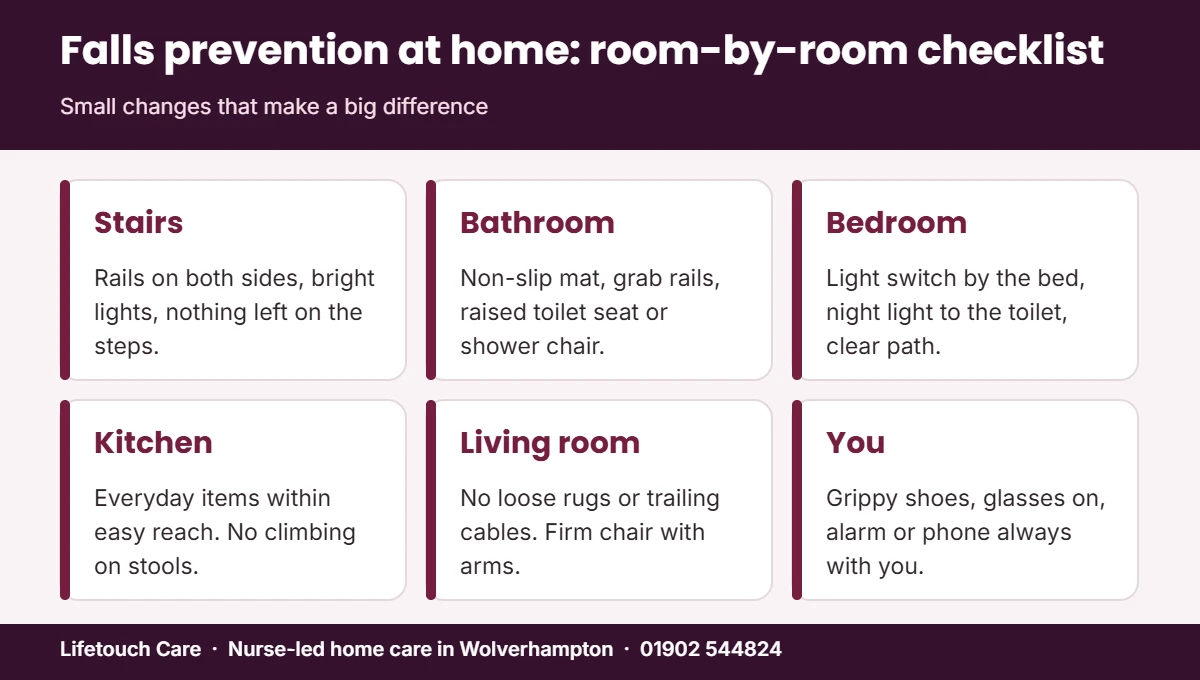
Go room by room and remove loose rugs, trailing cables, clutter on the stairs and anything left on the floor. Keep items used every day within easy reach so there is no need to climb or stretch. Good lighting matters too: bright bulbs on the stairs and landing, a light switch near the bed, and plug-in night lights on the route to the toilet.
3. Make the bathroom and stairs safer
Bathrooms and stairs are where many falls happen. A non-slip mat in the bath or shower, grab rails by the toilet and bath, a raised toilet seat or shower chair, and sturdy rails on both sides of the stairs all help. An occupational therapist can assess the home and recommend equipment. In Wolverhampton, you can ask the GP or the council’s adult social care team about a home assessment.
4. Choose safe footwear and clothing
Well-fitting shoes or slippers with a good grip and a back are much safer than loose slippers, socks or bare feet. Avoid long dressing gowns or trousers that could catch underfoot. If feet are painful or nails are long, ask about a podiatry appointment, because sore feet change the way people walk.
5. Review medicines regularly
Some medicines can cause dizziness, drowsiness or low blood pressure on standing, especially when someone takes several together. Ask the GP or pharmacist for a medicines review, particularly after any change or a fall. Never stop or change a medicine without advice. Carers who support with medicines can report side effects such as dizziness or unsteadiness straight away.
6. Check eyesight, hearing and feet
Regular eye tests and hearing checks are part of falls prevention at home. Cataracts, out-of-date glasses or wearing varifocals on the stairs can all make missteps more likely. Keep glasses clean and within reach, and make sure hearing aids are working.
7. Eat well, drink enough and look after bones
Not eating or drinking enough can cause dizziness, weakness and confusion. The NHS also advises looking after bones with calcium-rich foods and enough vitamin D. Carers can help with regular meals and drinks and notice if someone is losing weight or drinking less than usual.
8. Have a plan to get help quickly
A personal alarm or mobile phone kept on the person means help can come quickly if they fall. In Wolverhampton, the Telecare service, run by Wolverhampton Homes for the council, provides a home alarm unit and a pendant worn around the neck or wrist that connects to a monitoring centre. It is free for people on certain benefits. A key safe also lets carers or emergency services get in without breaking down the door.
What should you do if someone falls?
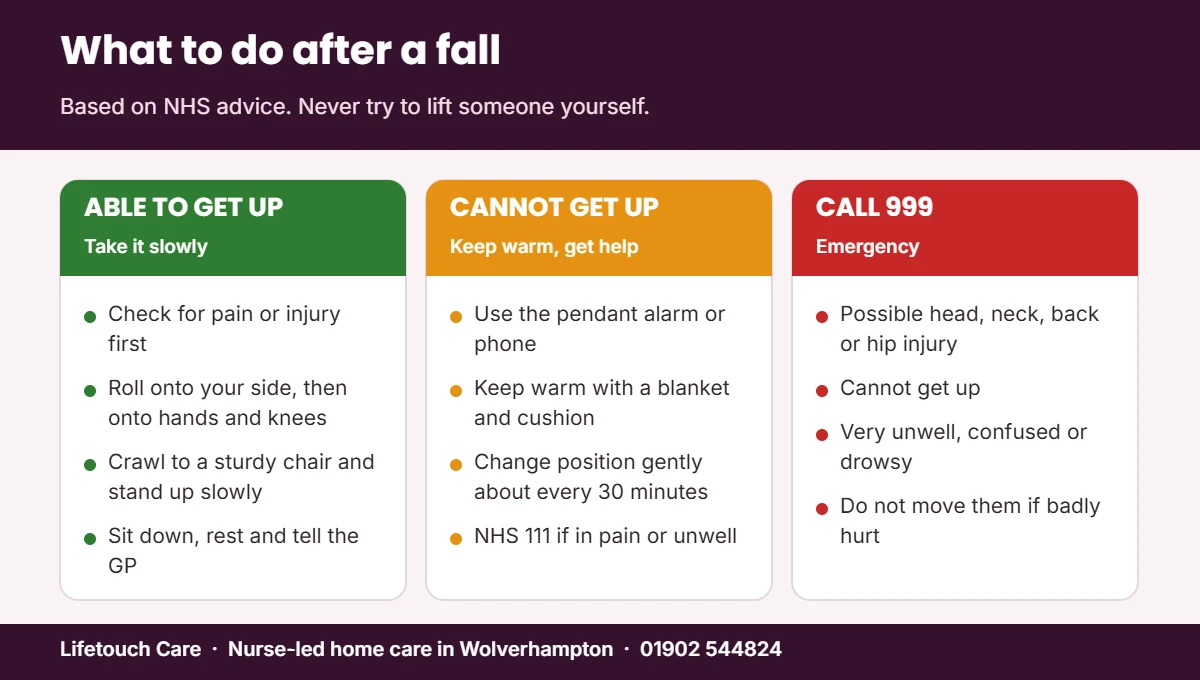
Stay calm and check for pain or injury before trying to move. NHS advice is to get up slowly only if the person feels able: roll onto the side, get onto hands and knees, crawl to a sturdy chair, put one foot flat on the floor and stand up slowly while holding on, then sit and rest. Do not try to lift someone yourself, as you could injure both of you.
If they cannot get up, keep them warm and comfortable with a blanket and cushion, help them change position gently every 30 minutes or so, and call for help. Call 999 if they may have hurt their head, neck, back or hip, cannot get up, or seem very unwell. Use NHS 111 if they are in pain or unwell but it is not an emergency. Always tell the GP about any fall, even if there was no injury.
Falls prevention at home support in Wolverhampton
NICE guidance published in 2025 recommends personalised falls assessments for people aged 65 and over, looking at things like home hazards, medicines, eyesight and long-term conditions, alongside strength and balance programmes. You can read the NICE information for the public on falls.
Locally, the GP is the first step. They can check balance and refer to the Royal Wolverhampton NHS Trust’s Falls Prevention Service, based at West Park Rehabilitation Hospital. The trust’s leaflet says family members can also refer directly on 01902 444502; check the current referral route with the GP or the trust. Age UK’s free guide Staying steady also has helpful exercises and home safety tips.
How can care at home help prevent falls?
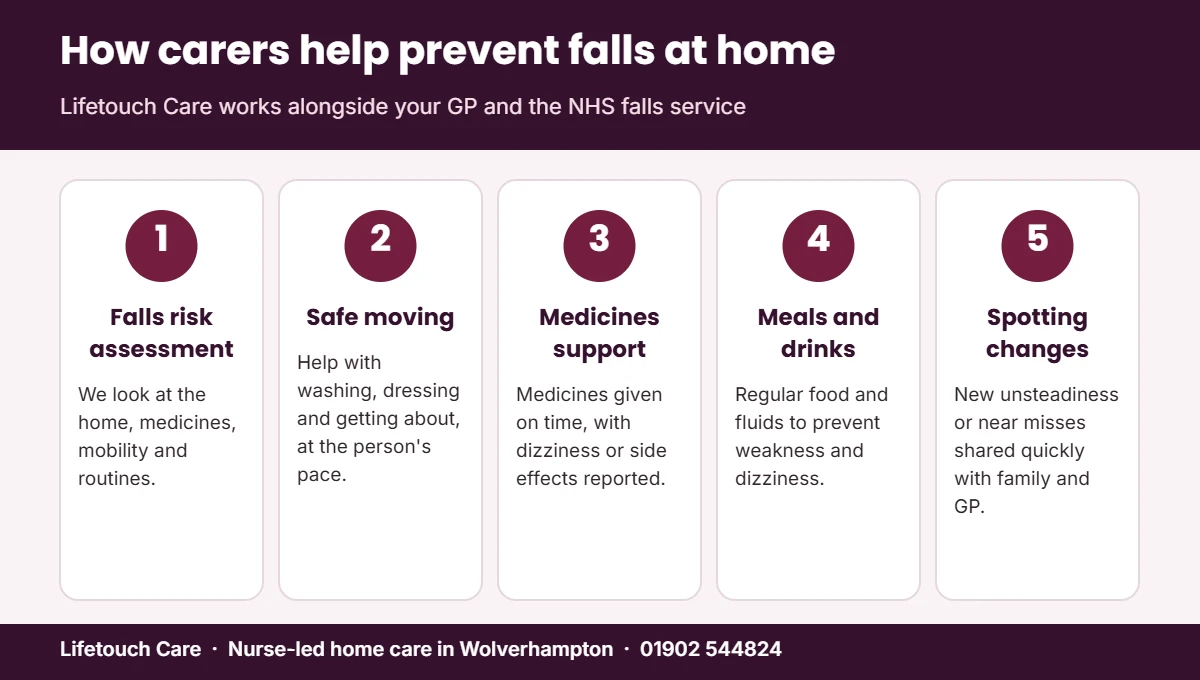
Professional carers see the person regularly, so they often notice changes before anyone else, such as new unsteadiness, dizziness, confusion or reluctance to walk. At Lifetouch Care, our care plans include a falls risk assessment, and carers report concerns to the family, GP or nurse quickly.
Visiting homecare
A morning visit to help with washing and dressing, when many falls happen, and further calls for meals, medicines and a safety check can reduce risk considerably. Our visiting homecare service is flexible, and our guide on how often visiting homecare should be arranged helps families decide what is needed.
Live-in care
For people who have fallen several times, get up often at night or are anxious being alone, live-in care means someone is always there to help with moving around safely.
Nurse-led care
Where falls are linked to health conditions such as heart failure, COPD, Parkinson’s or dementia, nurse-led care adds clinical oversight, medicines support and closer monitoring. Our guides to COPD care at home and adapting your home for someone with dementia include more safety tips.
After a fall or hospital stay
The weeks after a fall or a hospital admission are when people are most vulnerable. Our hospital discharge support helps people settle home safely, and our guide to care after hospital discharge covers the first days home.
Supporting family carers
Worrying about a parent falling when you are not there is exhausting. If your relative has had a fall or near miss, our guide to the signs an elderly parent may need care at home may help you decide on next steps. Planned respite care can give you a break while your relative stays safe at home, and the Age UK advice line on 0800 678 1602 offers free information.
Lifetouch Care: Falls Prevention at Home in Wolverhampton
Lifetouch Care is a CQC-registered, nurse-led home care provider based in Wolverhampton. Our falls prevention at home starts with a nurse-led assessment that looks at the home, medicines, mobility and routines, and our carers help people move safely, stay active and get help quickly if something changes. We respect each person’s culture, language, faith and food preferences.
To discuss falls prevention at home for yourself or a relative, call 01902 544824 or get in touch online.
Frequently asked questions
What is falls prevention at home?
Falls prevention at home means reducing the things that make someone likely to fall, such as weak muscles, trip hazards, poor lighting, unsuitable footwear, medicine side effects and eyesight problems, and having a plan to get help quickly if a fall happens.
How common are falls in older people?
NICE reports that around a third of people aged 65 and over, and around half of people aged 80 and over, fall at least once a year.
What exercise helps prevent falls?
Strength and balance exercises done at least twice a week help most. Ask the GP or falls service about a programme that suits the person.
Which rooms are most risky for falls?
Stairs and bathrooms are common places for falls, followed by bedrooms at night. Good lighting, grab rails, non-slip mats and clear floors help.
Can medicines cause falls?
Yes. Some medicines can cause dizziness, drowsiness or low blood pressure on standing. Ask the GP or pharmacist for a medicines review, and never stop a medicine without advice.
What should I do if my parent falls and cannot get up?
Do not try to lift them. Keep them warm and comfortable, help them change position gently, and call for help. Call 999 if they may have hurt their head, neck, back or hip or cannot get up.
Should we tell the GP about a fall with no injury?
Yes. Any fall is a warning sign. The GP can check balance and refer to the local falls prevention service.
How do we get a falls alarm in Wolverhampton?
The Telecare service, run by Wolverhampton Homes for the City of Wolverhampton Council, provides pendant alarms connected to a monitoring centre. It is free for people on certain benefits.
Can home carers help prevent falls?
Yes. Carers help with washing, dressing and moving safely, support medicines and meals, encourage activity and report changes such as new unsteadiness quickly.
How can families in Wolverhampton arrange falls prevention at home?
Contact Lifetouch Care on 01902 544824 or through our contact page to arrange a nurse-led assessment and discuss the support your relative needs.