




Lifetouch Care · Wolverhampton
How Can COPD Care at Home Help Someone Breathe Easier in Wolverhampton?
COPD care at home helps people living with chronic obstructive pulmonary disease manage their breathing, medicines and energy in the place they feel most comfortable. COPD is a long-term lung condition that includes emphysema and chronic bronchitis. It can make everyday tasks such as washing, dressing, climbing the stairs or making a meal tiring, and flare-ups can come on quickly, especially in winter.
The right support at home can make a real difference. This guide explains what good COPD care at home involves, how carers work alongside the NHS respiratory team, the warning signs families should never ignore, and how to choose the right level of help for someone in Wolverhampton.
What is COPD care at home?
COPD care at home is practical and clinical support, delivered in the person’s own home, that helps them live as well as possible with COPD. Depending on their needs, it can include help with personal care and mobility, support with prescribed inhalers, nebulisers and home oxygen, meal preparation, housework that would leave them breathless, companionship, and close monitoring for changes in their breathing.
COPD affects people differently. Some people only need a little help on difficult days, while others with severe COPD need several visits a day or live-in support. The aim is always the same: to keep the person safe, comfortable and as independent as possible, and to reduce avoidable trips to hospital.
Why does COPD care at home matter in Wolverhampton?
COPD is common. NICE estimates that about 1.2 million people in the UK have a diagnosis, and many more have it without knowing. Wolverhampton has thousands of people on GP COPD registers, and COPD flare-ups are a common reason for emergency hospital admission, particularly in winter.
Asthma + Lung UK explains that flare-ups usually last 7 to 10 days, and that while most people recover fully within 4 to 6 weeks, about 1 in 5 still have symptoms eight weeks later. Reliable support at home during and after a flare-up helps people rest, take their medicines correctly and regain their strength, while carers watch for signs that they need medical help.
7 ways COPD care at home supports daily life
1. Following the COPD self-management plan
Everyone with COPD should have a personal self-management plan, made with their GP or respiratory nurse. It sets out their usual medicines, what a “normal” day looks like, the signs of a flare-up and what to do about them. Asthma + Lung UK says using a plan can improve quality of life and reduce hospital visits. A good care provider keeps a copy in the care records, so every carer follows the same plan. If your relative doesn’t have one, ask the GP surgery or respiratory nurse for one.
2. Support with inhalers and nebulisers
Inhalers only work if they are used correctly, and many people find the technique hard, especially when they are breathless or have weak hands. Trained carers can prompt or give prescribed inhalers and nebulisers at the right times, check that spacers and masks are clean, and record every dose on the medication record. If your relative seems to be using their reliever inhaler more than usual, carers report it to the family and the GP or respiratory nurse rather than changing anything themselves.
3. Safe use of home oxygen
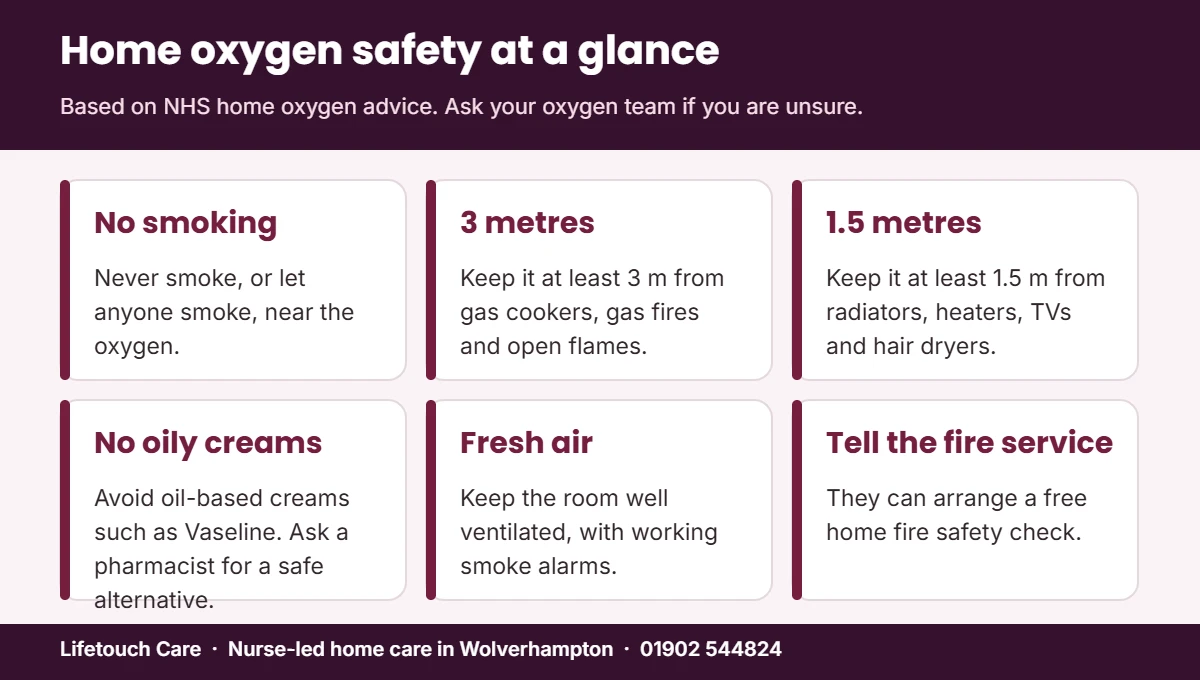
Some people with COPD are prescribed home oxygen because their blood oxygen levels are low. The NHS home oxygen page advises never smoking or letting anyone smoke nearby, keeping the equipment at least 3 metres from gas cookers, gas fires and open flames, and at least 1.5 metres from heat sources such as radiators and electric heaters. It also warns against oil-based creams such as Vaseline. Carers can check that tubing is not a trip hazard, that the concentrator is set as prescribed and that the room is well ventilated. Tell the local fire service that oxygen is used in the home, because they can arrange a free fire safety check.
4. Pacing personal care to save breath
Washing and dressing can leave someone with COPD exhausted for the rest of the morning. Carers help by breaking tasks into smaller steps, giving time to rest, using a shower stool or perching stool, choosing loose clothing that is easy to put on and avoiding steamy bathrooms, which can make breathing harder. The aim is to help the person do as much as they safely can for themselves, without wearing them out.
5. Breathing techniques and positions
Respiratory physiotherapists and pulmonary rehabilitation teams teach techniques such as pursed-lip breathing, “blow as you go” during effort, and resting positions such as sitting and leaning forward with the arms supported. Carers can gently remind the person to use the techniques their own team has taught them. In Wolverhampton, the Royal Wolverhampton NHS Trust runs a pulmonary rehabilitation programme of exercise and education. Referral comes from a health professional, so ask the GP or respiratory nurse whether your relative could benefit.
6. Nutrition, fluids and keeping active
People with COPD use extra energy just to breathe, and breathlessness can make eating large meals uncomfortable. Small, frequent meals and snacks, plenty of fluids to keep mucus thin (unless a fluid limit has been advised), and gentle movement through the day all help. Carers notice weight loss, poor appetite or a reduced fluid intake and report it before it becomes a problem.
7. A warm, smoke-free, healthy home
Cold air, smoke, strong fumes and damp can all trigger symptoms. Keep the main rooms warm, avoid smoking indoors, use cleaning sprays sparingly and air rooms regularly. Seasonal vaccines matter too: Asthma + Lung UK advises people with COPD to take up the vaccines they are offered, including flu, COVID-19, RSV and pneumococcal. Our guide to winter care at home has more tips on staying warm and well.
What are the warning signs of a COPD flare-up?
It is normal for COPD symptoms to vary a little from day to day. A flare-up, also called an exacerbation, is when symptoms get worse and stay worse. According to Asthma + Lung UK, common signs include:
- feeling more out of breath than usual
- coughing or wheezing more than usual
- producing more phlegm, or phlegm that has changed colour
- extra tiredness, or finding everyday activity harder
- new confusion or swollen ankles
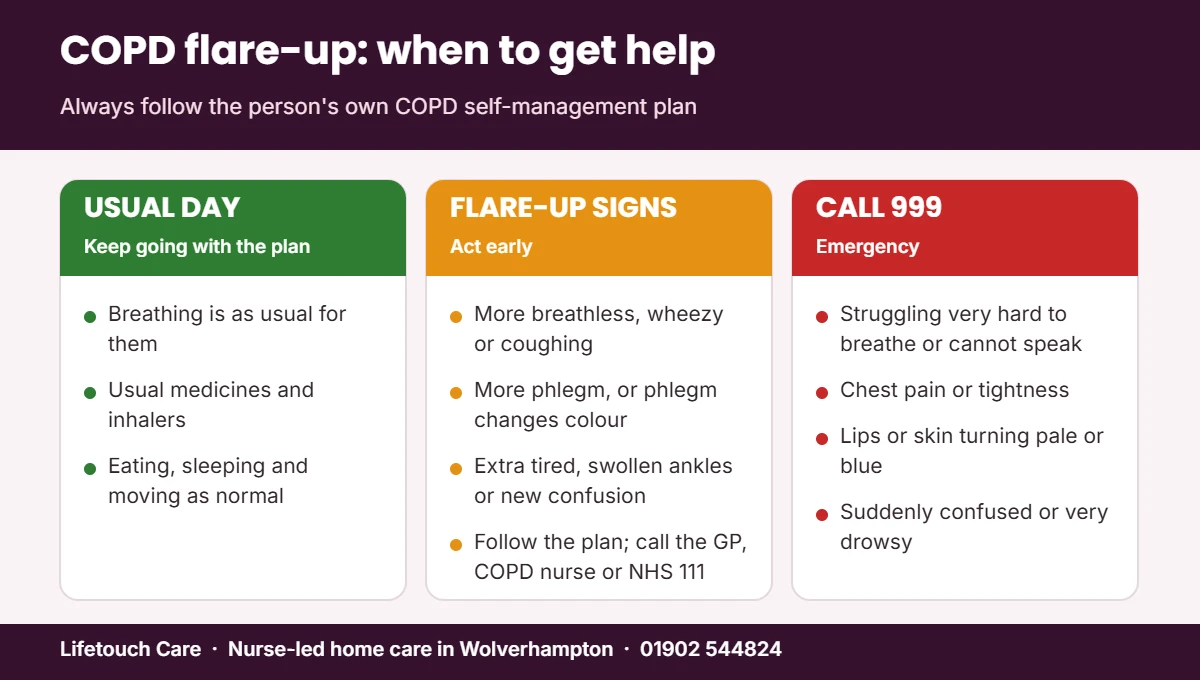
If you notice these signs, follow the person’s self-management plan. Some people keep a “rescue pack” of steroid tablets or antibiotics at home, prescribed by their GP for use during a flare-up. Always tell the GP or COPD nurse when a rescue pack is started, so they can review treatment and arrange a replacement. Use NHS 111 for urgent advice out of hours.
Call 999 straight away if the person is struggling very hard to breathe or cannot speak, has chest pain or tightness, has lips or skin turning pale or blue (on brown or black skin, check the palms of the hands or inside the lips), or suddenly becomes confused or very drowsy.
How do carers work with the NHS respiratory team?
COPD care at home works best as a team effort. The GP and practice nurse usually lead routine COPD reviews, the respiratory or home oxygen service manages oxygen, and the pulmonary rehabilitation team helps with exercise and breathing. A care provider adds the day-to-day support in between.
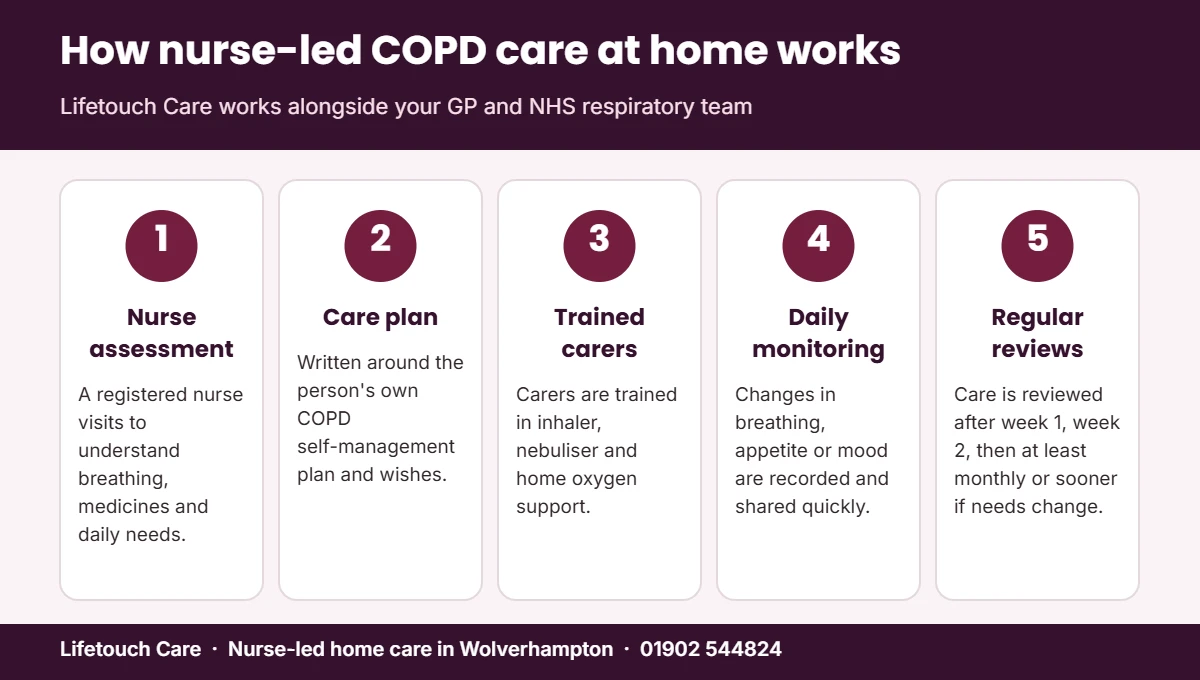
At Lifetouch Care, our nurse-led care means a registered nurse carries out the assessment, writes the care plan around the person’s own self-management plan and trains carers in inhaler, nebuliser and oxygen support. Carers record changes in breathing, appetite and mood, and share concerns with the family and health professionals quickly. Many people with COPD also live with heart problems. Our guide to heart failure care at home explains how we support both conditions together.
Which type of COPD care at home is right for your relative?
Visiting homecare
For people with mild to moderate COPD, a few visits a day can cover washing, dressing, medicines and meals, with carers checking breathing at each visit. Our visiting homecare service can be increased during winter or after a flare-up. Our guide on how often visiting homecare should be arranged helps families decide what is needed.
Live-in care
People with severe COPD, frequent flare-ups or breathlessness at night may feel safer with someone in the home all the time. Live-in care provides continuous support from a consistent carer who gets to know the person’s normal breathing pattern well.
Support after a hospital stay
The weeks after a COPD admission are when people are most at risk of going back into hospital. Our hospital discharge support helps people settle home safely, and our guide to care after hospital discharge covers the first days home.
Care in advanced COPD
As COPD progresses, the NHS encourages people to make a clear plan with their doctor about their wishes, including whether they would prefer to be cared for at home. Our guide to palliative care at home vs hospice care explains the options.
Supporting family carers
Watching someone you love struggle to breathe is frightening, and caring for them day and night is tiring. Make sure you know what is in their self-management plan, keep important phone numbers in one place, and look after your own health too, including your own winter vaccines. Planned respite care at home lets you take a break while your relative’s routine stays the same. The Asthma + Lung UK helpline on 0300 222 5800 also offers free advice for people with COPD and their families.
Lifetouch Care: COPD Care at Home in Wolverhampton
Lifetouch Care is a CQC-registered, nurse-led home care provider based in Wolverhampton. Our COPD care at home is planned by registered nurses and built around each person’s own self-management plan, with carers trained in inhaler, nebuliser and home oxygen support. We work closely with GPs and respiratory teams, and we respect each person’s culture, language, faith and food preferences.
To discuss COPD care at home for yourself or a relative, call 01902 544824 or get in touch online.
Frequently asked questions
What is COPD care at home?
COPD care at home is support in a person’s own home that helps them live with COPD, including help with personal care, prescribed inhalers, nebulisers and oxygen, meals, mobility, and watching for early signs of a flare-up.
Can carers help with inhalers and nebulisers?
Yes. Trained carers can prompt or give prescribed inhalers and nebulisers as set out in the care plan, keep equipment clean and record every dose. They do not change doses; any concerns go to the GP or respiratory nurse.
Is it safe to use home oxygen with carers in the house?
Yes, when safety rules are followed. Nobody should smoke near the oxygen, the equipment should be kept away from open flames and heat sources, and oil-based creams should be avoided. Carers help check these every visit.
What is a COPD self-management plan?
It is a personal plan made with your GP or respiratory nurse that sets out your usual medicines, what to do in a flare-up and when to get help. Carers follow it so everyone works the same way.
What is a COPD rescue pack?
A rescue pack is a supply of steroid tablets and sometimes antibiotics that a GP may prescribe to keep at home for a flare-up. Always tell the GP or COPD nurse when it is started.
When should we call 999 for someone with COPD?
Call 999 if they are struggling very hard to breathe or cannot speak, have chest pain, have lips or skin turning pale or blue, or suddenly become confused or very drowsy.
How long does it take to recover from a COPD flare-up?
Flare-ups usually last 7 to 10 days. Most people fully recover within 4 to 6 weeks, but some still have symptoms for longer. Extra support at home can help during this time.
What is pulmonary rehabilitation?
It is a programme of exercise and education for people with long-term lung conditions such as COPD. In Wolverhampton it is run by the Royal Wolverhampton NHS Trust, and a health professional makes the referral.
Can COPD care at home be increased in winter?
Yes. Many families add extra visits during the colder months or after a flare-up, then review the care again when the person is stronger.
How can families in Wolverhampton arrange COPD care at home?
Contact Lifetouch Care on 01902 544824 or through our contact page to arrange a nurse-led assessment and discuss the support your relative needs.