



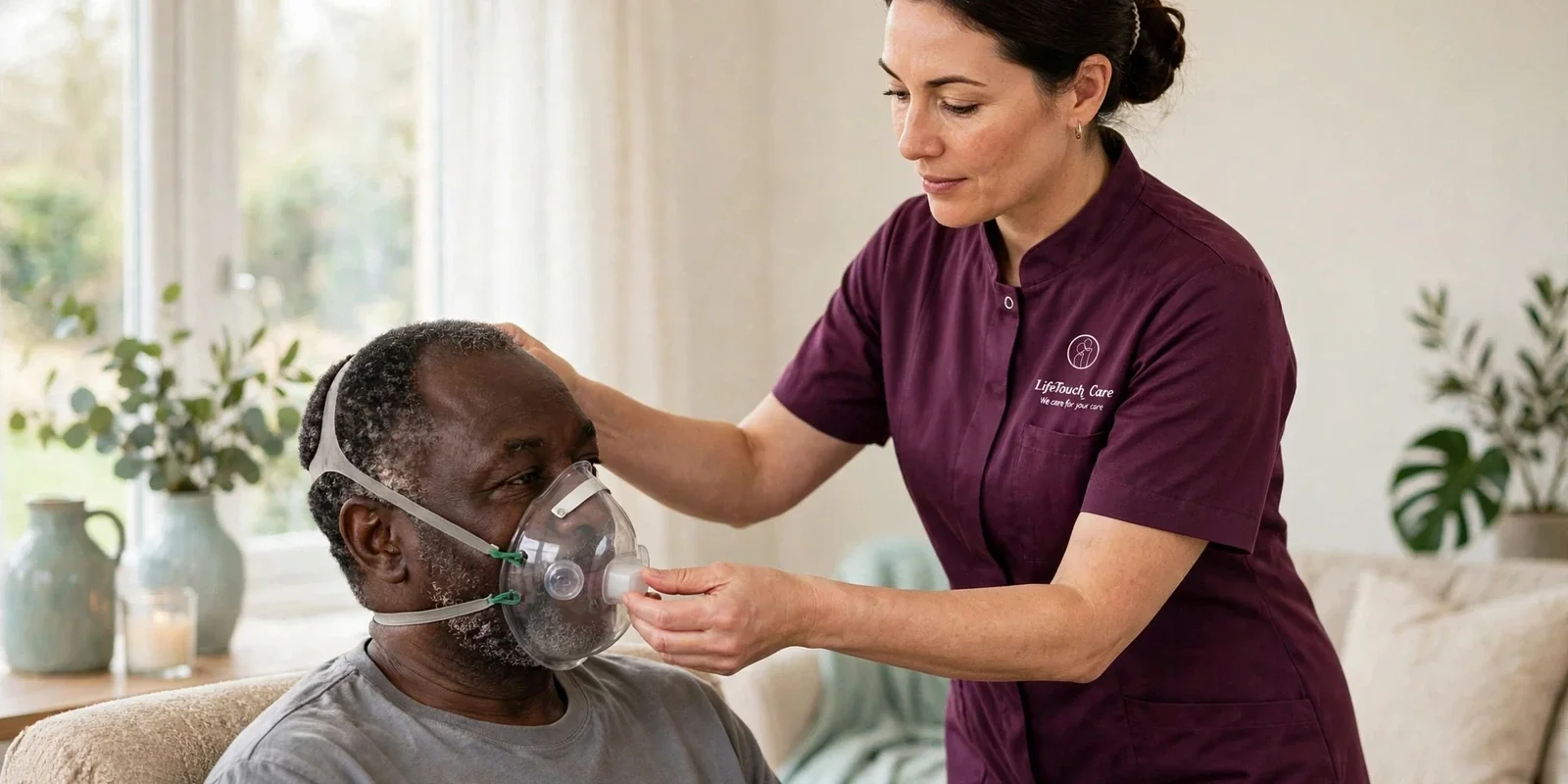
Breathing support at home, planned and overseen by registered nurses
Ventilator home care in Birmingham from LifeTouch Care means a nurse-led team trained on your own machine, whether you use a mask at night or a ventilator through a tracheostomy around the clock.

Coming home on a ventilator is a big step for the person and everyone around them. Good care is less about the machine itself and more about the people around it: knowing the person’s normal, noticing small changes early and staying calm when an alarm sounds.
Our nurses take the ventilation prescription and discharge plan from the hospital team, assess the person at home and turn that into a written care plan. They then build a small, regular team and train each carer on the exact ventilator, circuit and suction kit the person uses.
The ventilation team keeps control of settings. We look after everything else, every shift, and keep them, the GP and the family updated.
| Non-invasive ventilation (NIV) | Invasive ventilation | |
|---|---|---|
| How air is given | Through a nasal, face or full-face mask | Through a tracheostomy tube in the neck |
| Typical use | Overnight and at rest, sometimes some daytime hours | Many hours a day or continuously |
| Main care tasks | Mask fitting, pressure care on the face, positioning, watching for drowsiness | Suction, humidification, tracheostomy care, circuit changes |
| Staffing | Often waking nights or visits around sleep | Usually a trained carer present at all times |
Our ventilator home care in Birmingham is for adults whose breathing muscles, lungs or airway need long-term help. We often support people living with:
Each plan is written for one person, but most packages of ventilator home care in Birmingham include a mix of the following.
Settings matched to the prescription, alarms tested and filters and tubing checked at every handover.
Suction, cough assist and chest positioning as the respiratory physiotherapist has taught.
Clean, dry stoma, tie and dressing changes, and inner cannula care. Read about our airway management.
A good seal without sore skin, protective dressings where needed, and help putting the mask on and off.
Water chambers or heat-moisture filters kept right, and oxygen given exactly as prescribed.
PEG and tube feeding, nebulisers and medicines recorded on a digital MAR chart.
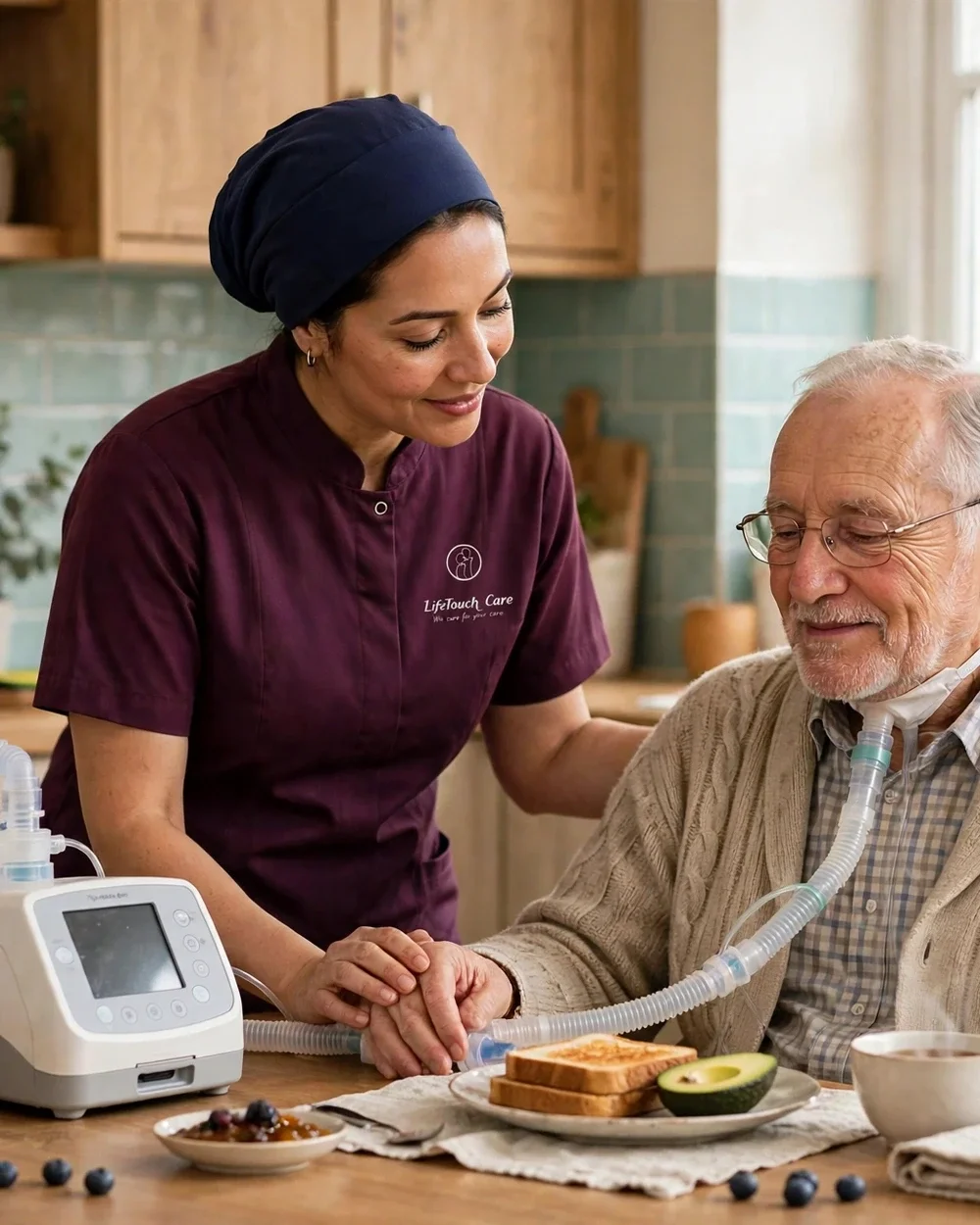
No two days are the same, but this is how a 24-hour package often runs. The aim is a normal home life, with the clinical care fitting around it.
The night carer hands over to the day carer, ventilator checks are done, then suction, personal care and getting up.
Feeds or meals, medicines, and safe transfers with the ventilator kept connected and the emergency bag nearby.
Hospital appointments, a trip to the park or time with friends, using the portable ventilator and spare batteries.
Equipment cleaned and charged, NIV mask fitted if used at night, and the plan for the night agreed.
A carer stays awake, responds to alarms, gives suction and repositions the person so they and the family can rest.
Before ventilator home care in Birmingham starts, the nurse agrees a written emergency plan with the person’s home ventilation team. Every carer must practise it with the nurse before they are signed off. In an emergency, they:
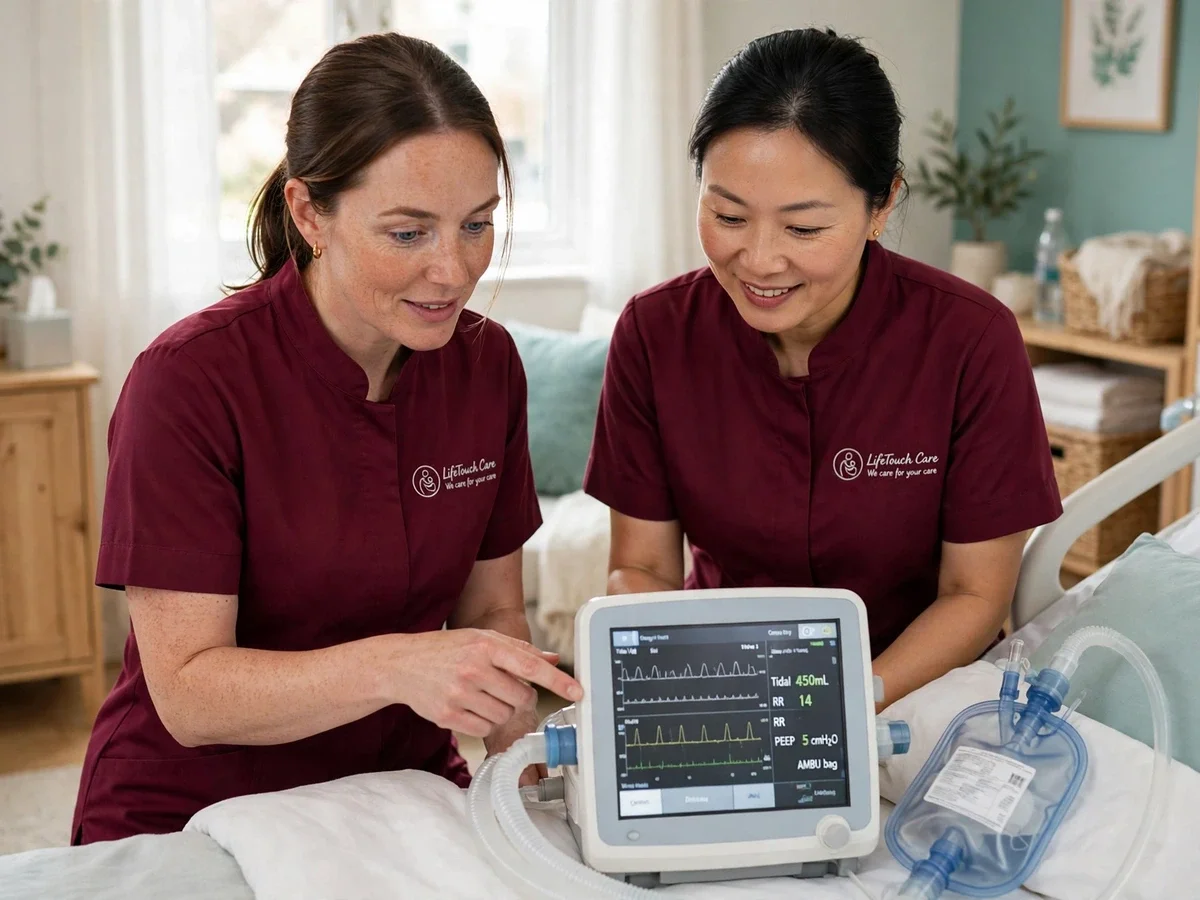
Many referrals come from hospital teams planning a discharge. We can join hospital discharge meetings and start training carers on the ward so the move home is safe.
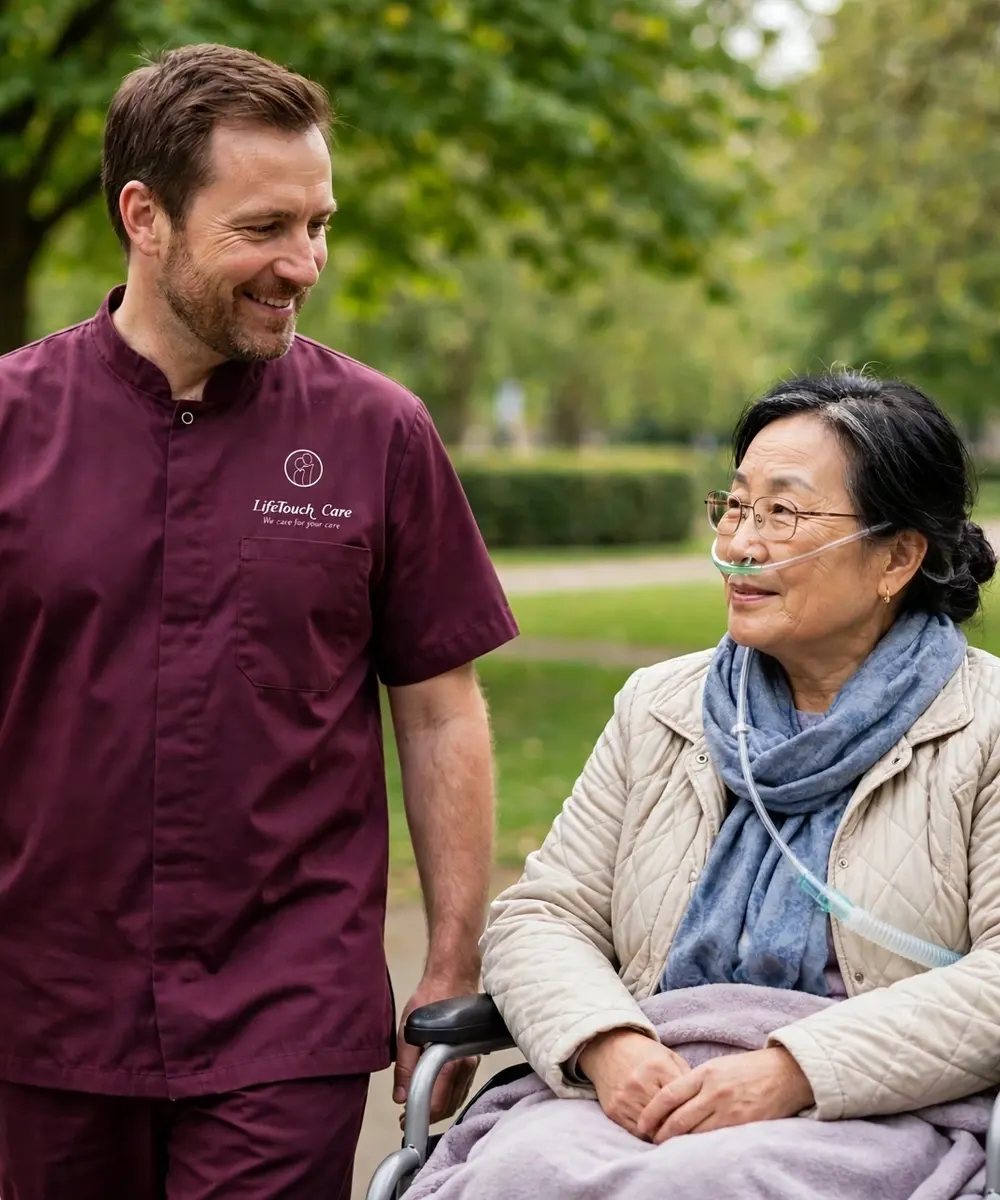
We support people across the city and its suburbs, including:
We work with University Hospitals Birmingham, including discharge teams at the Queen Elizabeth, Heartlands and Good Hope hospitals, with Birmingham Community Healthcare community nurses, and with Birmingham City Council adult social care. We follow the plan set by each person’s specialist home ventilation team.
Our office is in Wolverhampton. The nurse responsible for your ventilator home care in Birmingham visits for the assessment, regular reviews and whenever the team needs clinical support.
Long-term ventilation is usually treated as a health need, so the NHS often funds most or all of the package. We will talk you through the route that fits.
NHS Continuing HealthcareFully NHS-funded care for adults whose needs are mainly health needs. See the NHS guide to CHC.
Personal health budgetNHS money managed by the person or family, so they can choose LifeTouch Care as their provider.
Joint funding with the councilShared NHS and Birmingham City Council funding where needs are mixed, or a direct payment.
Injury claims and private carePackages set up through a case manager after a serious injury, or self-funded. See our complex care costs guide.
LifeTouch Care provides nurse-led ventilator home care across Birmingham and Sutton Coldfield. Registered nurses assess, plan and review every package, and trained carers deliver the day-to-day support.
Yes. We support adults using non-invasive ventilation through a mask and adults on invasive ventilation through a tracheostomy, following the plan set by their home ventilation team.
Yes. We provide waking nights, so a trained carer stays awake to respond to alarms, give suction and reposition the person while the family sleeps.
Only the prescribing clinicians, usually the home ventilation team. Our carers check the machine matches the prescription at each handover and report anything unusual straight away.
A nurse trains each carer on the person’s own ventilator, suction and emergency equipment, often alongside the hospital team, and signs off their competency before they work alone.
It depends on the hours needed and how complex the care is. We join discharge planning early so the team can be recruited and trained before the person comes home.
Often, yes. Most adults on long-term ventilation qualify for NHS Continuing Healthcare or a personal health budget. Some packages are joint-funded with Birmingham City Council or privately funded.
No. Our ventilator home care service is for adults aged 18 and over.

Tell us about the person, their ventilator and the support they need. We will be honest about what we can offer and how quickly.
Also in Birmingham: complex care in Birmingham and spinal injury care in Birmingham. Ventilator home care is also available in Wolverhampton, Walsall, Dudley and Telford. Read more about our ventilator care, nurse-led care and live-in care.