



Epilepsy awareness, rescue medication and seizure management
Knowing how to recognise a seizure, respond calmly, and use rescue medication correctly can be the difference between a manageable event and a medical emergency. This guide from Lifetouch Care explains the essentials of epilepsy awareness, buccal midazolam and rectal diazepam, and how our community teams monitor and support people living with epilepsy safely at home.
Epilepsy is one of the most common serious neurological conditions, affecting people of every age. For most people, seizures are managed well with daily anti-seizure medication and rarely need emergency intervention. But for a smaller group at risk of prolonged or repeated seizures, having the right knowledge, a personalised care plan, and trained carers on hand is essential for safety. This guide covers three areas that matter most in community and home-based epilepsy care: recognising and understanding seizures, using emergency rescue medication correctly, and monitoring seizures over time so care stays proactive rather than reactive.
None of this replaces a person’s own individualised emergency management plan, which should always be agreed with their neurologist or epilepsy specialist nurse and followed exactly as written. What follows is general background to help families and carers understand why that plan matters and what good seizure care looks like in practice.
Understanding seizures and recognising the signs
Epilepsy is a tendency to have recurring seizures caused by a burst of unusual electrical activity in the brain. Seizures can look very different from person to person, which is why understanding the range of presentations matters just as much as knowing the dramatic ones.
The main types of seizure
Seizures are broadly grouped by where they start in the brain. Focal seizures begin in one area and may or may not affect awareness — the person might experience unusual sensations, brief confusion, or repetitive movements while remaining partly aware. Generalised seizures affect both sides of the brain from the outset. The best known is the tonic-clonic seizure, where the body stiffens, then jerks rhythmically, often with loss of consciousness. Others include absence seizures (brief lapses in awareness, common in children, easily mistaken for daydreaming) and myoclonic seizures (sudden brief muscle jerks).
Recognising a seizure
Not every seizure looks like the dramatic convulsions often shown on television. Signs can include a blank stare, lip-smacking or fumbling movements, sudden falls, confusion, or a brief pause in activity that passes within seconds. Knowing a person’s own typical pattern — captured in their care plan — helps carers recognise quickly when something is different from their usual seizure and may need a different response.
Common triggers
While seizures can happen without warning, some people notice patterns. Missed or delayed medication doses are the most common preventable trigger. Others include lack of sleep, illness or fever, alcohol, flashing or flickering lights (in a minority of people with photosensitive epilepsy), low blood sugar, and significant stress. Recording possible triggers over time, rather than assuming a single cause, gives the clearest picture.
Reducing stigma, building confidence
Epilepsy still carries unnecessary stigma, and misplaced fear can make bystanders freeze or act unsafely. Good awareness training replaces that fear with calm, practical confidence — for carers, family members, and the wider community the person moves through, including schools, workplaces and social settings.

Buccal midazolam & rectal diazepam
For people at risk of prolonged or repeated seizures, a doctor may prescribe emergency rescue medication to stop a seizure before it becomes a medical crisis. In the UK, this is almost always buccal midazolam or rectal diazepam, given strictly according to an individual emergency management plan.
When rescue medication is used
UK clinical guidance recommends rescue medication for three situations: convulsive status epilepticus (a tonic-clonic seizure lasting 5 minutes or more), repeated or cluster seizures (typically three or more seizures within 24 hours that each stop on their own), and prolonged seizures that last notably longer than the person’s usual pattern. The exact trigger point — often “give after 5 minutes” — is always specified in the person’s own written plan, since usual seizure length varies from person to person.
Buccal midazolam
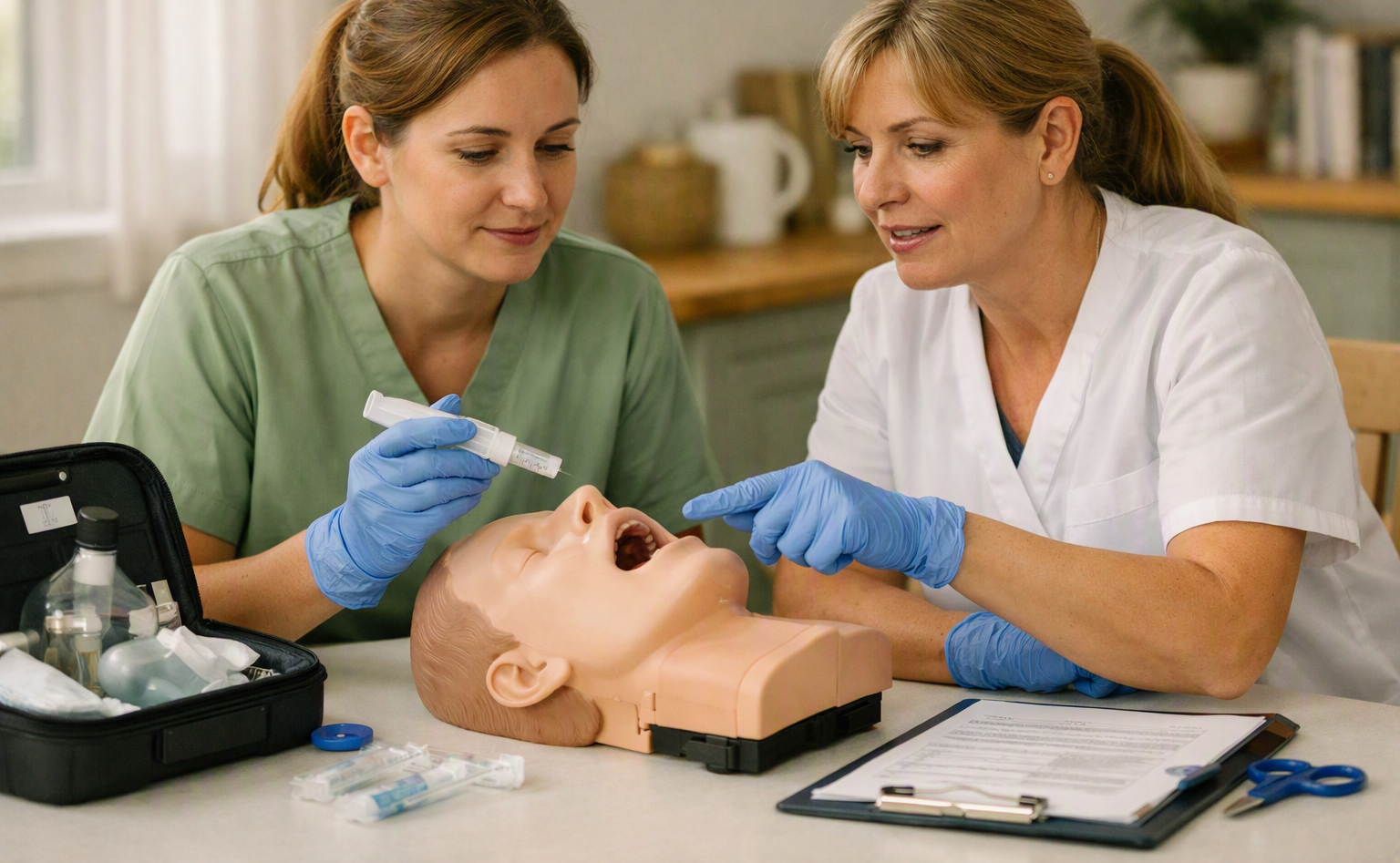
Buccal midazolam is given into the buccal cavity — the space between the cheek and the gum — where it’s absorbed quickly through the lining of the mouth. It’s now the most commonly used first-line community rescue medication in the UK because it’s straightforward to administer, doesn’t require exposing the person, and works quickly.
Rectal diazepam
Rectal diazepam is administered rectally and remains an important option, particularly where buccal midazolam isn’t available, isn’t tolerated, or where an allergy or reaction rules it out. Some children are prescribed rectal paraldehyde as an alternative for the same reasons.
Who can give it, and how they’re trained
Rescue medication must only be administered by people who are named in the person’s care plan and who have completed formal, up-to-date training aligned with recognised standards (in the UK, typically the Epilepsy Nurses Association, ESNA, framework). Care Quality Commission guidance is explicit that care staff supporting rescue medication must be trained and assessed as competent — this isn’t a task to improvise, however calm and capable a carer feels.
The individual emergency management plan
Every person prescribed rescue medication should have a clear, individual written plan covering: how to recognise their seizures, exactly when to give the medication (the timing threshold), the correct dose and route, whether and when a second dose is appropriate, and — critically — when to call 999 regardless of whether medication has been given. This plan should be reviewed regularly and updated whenever anything changes.
- The seizure continues 5 minutes after rescue medication has been given, or as specified in the care plan
- A second seizure begins before the person has recovered from the first
- Breathing is difficult, doesn’t return to normal, or the person’s colour looks wrong after the seizure stops
- It’s the person’s first-ever seizure, or they are injured, pregnant, or the seizure happens in water
Rescue medication should be stored securely at the temperature stated on the label, checked regularly for its expiry date, and replaced promptly once out of date or used — these medications typically have a shorter shelf life than routine daily medication, so this is a task worth building into a regular care routine.
Responding safely and tracking patterns over time
Most seizures end on their own within a couple of minutes and don’t need emergency treatment. Good seizure care is about staying calm, keeping the person safe, timing accurately, and recording what happened — so patterns are visible long before the next review.
Immediate response: Calm, Cushion, Call
For most seizures, the response is simple. Stay calm and stay with the person. Cushion their head if they’ve fallen, and clear away anything nearby that could cause injury — don’t try to hold them still or stop their movements. Never put anything in their mouth; this is a common myth and can cause real harm. Once jerking movements stop, gently roll the person onto their side into the recovery position and check that their breathing is returning to normal.
Timing matters most
Start timing the moment a seizure begins. This single piece of information — how long it lasted — is what tells a carer or paramedic whether this is a routine seizure or the start of a medical emergency. Note the start time as a habit, every time, even when a seizure seems to be following its usual pattern.
After the seizure (the post-ictal period)
Many people feel confused, exhausted, or want to sleep for anywhere from a few minutes to several hours after a seizure — this is normal and is called the post-ictal period. Stay with them, speak calmly, reassure them, and avoid rushing them back to activity before they feel ready. If breathing sounds difficult once the seizure has stopped, that’s a reason to call for emergency help even if the seizure itself was brief.
Monitoring and seizure diaries
Recording every seizure — date, time, how long it lasted, what it looked like, any possible trigger, and how long recovery took — builds a picture that’s far more useful to a neurologist or epilepsy specialist nurse than memory alone. Many people and care teams now use a seizure diary app or a simple shared logbook for this. Reviewing this record regularly can reveal patterns worth discussing at the next clinical review, such as a cluster around missed medication doses or poor sleep.
A note on SUDEP
Sudden Unexpected Death in Epilepsy (SUDEP) is rare but is something epilepsy teams take seriously, particularly for people with frequent tonic-clonic seizures. The strongest known protection is good seizure control — taking medication as prescribed, attending reviews, and following safety measures agreed with the epilepsy team. This is a sensitive topic and worth discussing openly with a specialist rather than searching for reassurance alone.

How Lifetouch Care keeps seizure support consistent
Seizure safety works best when everyone involved — family, care staff, and clinicians — is working from the same up-to-date plan, with clear roles and regular review.
What this looks like day to day
- Named, trained carers — every carer supporting rescue medication is individually assessed as competent, with refresher training completed annually
- Living care plans — the individual emergency management plan is reviewed regularly with the epilepsy specialist nurse or neurologist, not left to go stale
- Shared seizure records — timing, triggers and recovery details are logged consistently so patterns are visible at every clinical review
- Clear escalation — every carer knows exactly when to give rescue medication and, separately, exactly when to call 999 regardless
Supporting the wider circle
Family members, school staff or workplace colleagues often want to help but aren’t sure how. Lifetouch Care can provide basic seizure-awareness briefings for the people around someone’s daily life — separate from formal rescue medication training — so a seizure at school, at work, or on a day out is met with calm, informed support rather than panic.
Speak with the Lifetouch Care team
Our trained community carers support seizure recognition, rescue medication administration, and ongoing monitoring — built around each person’s own emergency management plan.
Get in touchThis article is provided for general information only and does not replace advice from a qualified healthcare professional, nor formal, accredited rescue medication training. Rescue medication must only be administered by someone named in the person’s individual emergency management plan who has completed the required competency training. Always follow the specific plan agreed with the person’s epilepsy specialist team, and call 999 in any emergency.