


Diabetes management, blood glucose monitoring & insulin administration
Good day-to-day diabetes care rests on three habits done consistently: monitoring blood glucose, giving insulin correctly and safely, and knowing how to respond when things go outside the target range. This guide from Lifetouch Care sets out what that looks like in practice, at home and in the wider community.
Diabetes is a lifelong condition affecting how the body regulates blood glucose. Type 1 diabetes means the body produces little or no insulin and requires insulin treatment from diagnosis; type 2 diabetes usually develops gradually and may be managed through lifestyle, tablets, or insulin depending on how it progresses. Whatever the type, safe day-to-day management comes down to the same three building blocks covered in this guide — general management habits, accurate glucose monitoring, and correct insulin technique where insulin is part of treatment.
The three everyday pillars of good control
Diabetes management is rarely about one big decision — it’s the accumulation of small, consistent daily habits across diet, activity and medication, supported by regular review with the diabetes care team.
Diet & nutrition
Balanced carbohydrate intake, portion awareness and consistent meal timing help keep glucose levels predictable through the day.
Physical activity
Regular movement improves insulin sensitivity, but activity also changes glucose levels — worth planning around, not avoiding.
Medication & monitoring
Tablets, insulin, and regular glucose checks work together — and each is reviewed and adjusted by the diabetes team over time, not fixed forever.

Knowing the number, and what to do with it
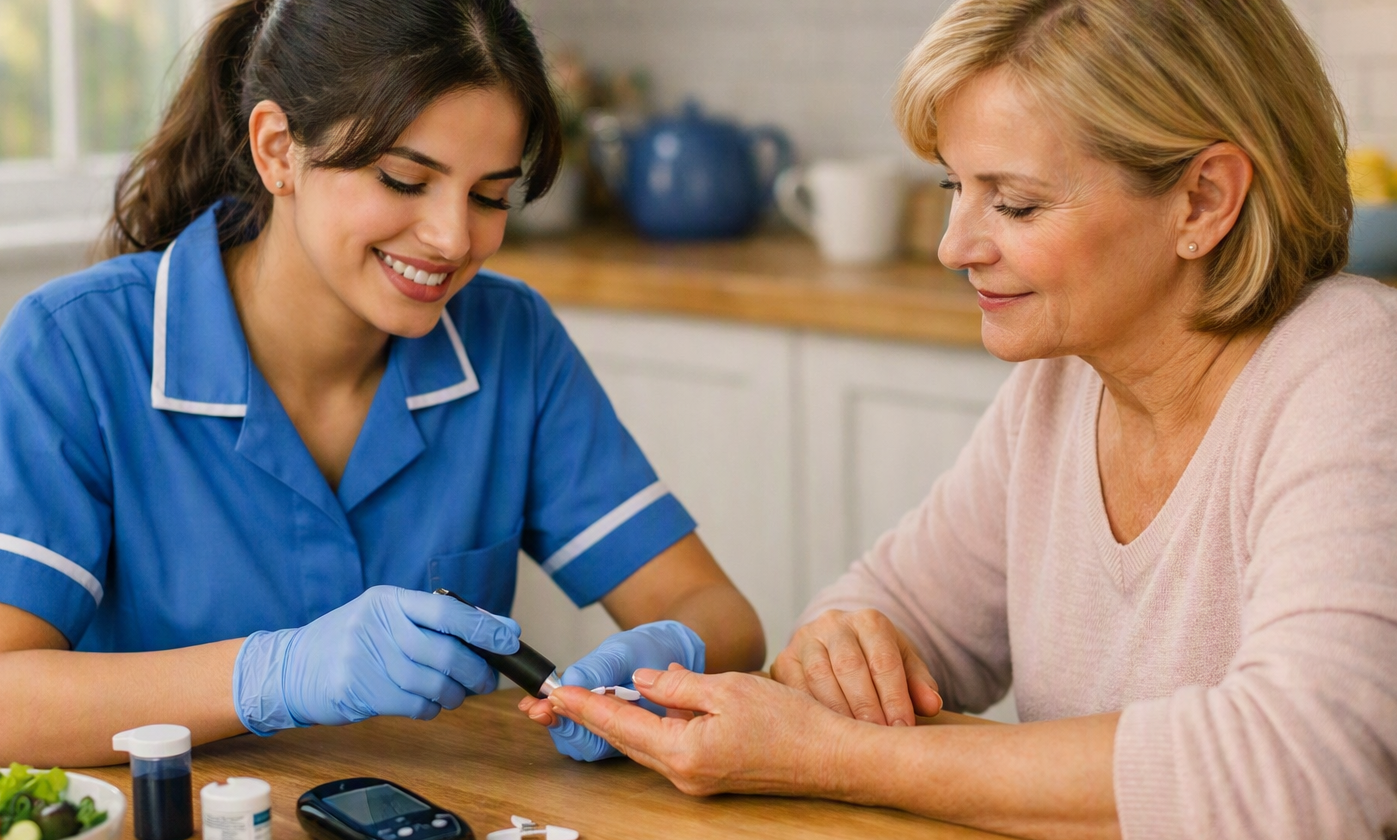
Monitoring only helps if the results lead to action — whether that’s reassurance that things are on track, or a clear next step when a reading falls outside the agreed range.
How monitoring is done
Most people monitor either by finger-prick blood testing with a handheld meter, or with a continuous/flash glucose monitor (CGM) worn on the skin that tracks glucose automatically throughout the day and night. Both approaches give the same essential information — the aim is picking the method that fits the person’s routine and is used consistently.
When to test
Typical times include before meals, before bed, and before driving, with extra checks during illness, after exercise, or when adjusting medication. Exact frequency and timing should always follow the plan agreed with the diabetes team, since this varies by treatment type and individual risk.
Recognising a hypo
Early signs of low blood glucose (hypoglycaemia) include shakiness, sweating, sudden hunger, irritability, and difficulty concentrating. Recognising these early — before confusion sets in — allows prompt treatment with fast-acting carbohydrate.
If blood glucose is below the level agreed in the care plan (often below 4 mmol/L): give 15g of fast-acting carbohydrate (such as a small glass of juice or glucose tablets), wait 15 minutes, then retest. Repeat if still low. Once recovered, a small snack containing longer-acting carbohydrate helps prevent another drop. If the person becomes drowsy, confused, or unable to swallow safely, this is an emergency — call 999.
Giving insulin safely, every time
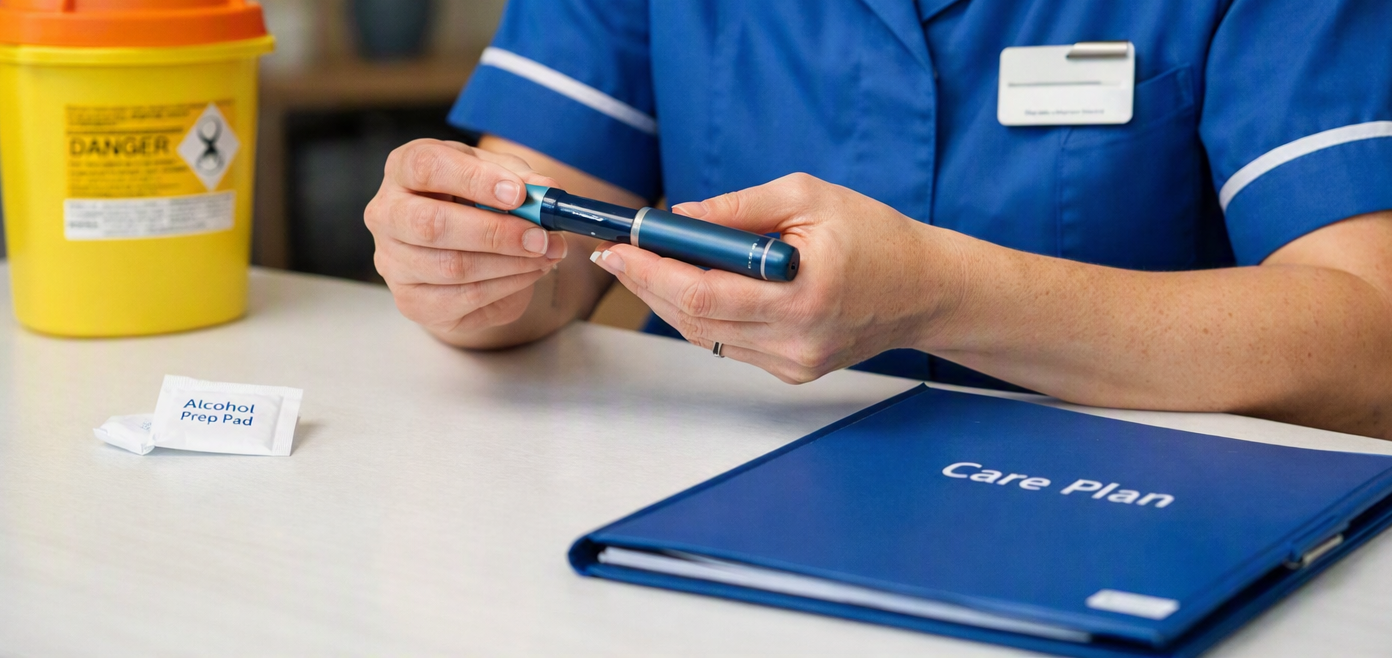
Insulin is a highly effective medicine, but it’s also unforgiving of technique errors. Correct injection method, site rotation and sharps safety protect both effectiveness and safety.
Wash hands
Clean hands and check the insulin type, dose and expiry before drawing up or dialling the pen.
Choose & rotate site
Pick a new spot within the agreed injection area — abdomen, thigh, or upper arm — away from the last injection.
Clean the skin
Wipe the site if needed and let it dry fully before injecting to reduce stinging and skin irritation.
Inject at the right angle
Insert the needle as trained — usually 90° with a short 4mm pen needle — and depress steadily.
Hold and withdraw
Leave the needle in place for the count advised (often 10 seconds) before withdrawing smoothly.
Dispose safely
Remove the needle using the outer cap only and place it directly into an approved sharps bin. Never recap by hand.
Types of insulin
Insulins vary by how fast they act and how long they last: rapid-acting insulin taken around meals (bolus), and longer-acting background insulin taken once or twice daily (basal). Many people use both as part of a combined regimen, and the diabetes team will specify exactly which insulin goes where and when.
Why site rotation matters
Injecting into the same small area repeatedly can cause lipohypertrophy — lumpy, thickened tissue that absorbs insulin unpredictably and can quietly undermine glucose control. Rotating within the agreed body area, moving a couple of centimetres each time, keeps absorption reliable.
Storage basics
Unopened insulin is usually stored in the fridge, while the pen or vial currently in use is typically kept at room temperature for a limited period once opened — always check the specific product’s patient leaflet, since this varies between insulin brands.
- Rotate injection sites every time
- Use a new needle for every injection
- Dispose of needles straight into a sharps bin
- Check the insulin type and dose against the prescription each time
- Injecting into lumpy, bruised or scarred skin
- Recapping or reusing a needle
- Giving insulin without checking blood glucose first, where the plan requires it
- Storing in-use insulin somewhere too hot, too cold, or in direct sunlight
Only trained, competent carers should administer insulin on someone else’s behalf, using a safety-engineered needle where required. Needles must never be recapped by hand. If a needlestick injury happens, wash the area with soap and water, encourage gentle bleeding, and seek medical advice promptly.
A joined-up team around the person
Diabetes care works best when the same plan is understood by everyone involved — the person, their family, care staff, and the wider clinical team.
What Lifetouch Care provides
- Carers trained and assessed as competent in blood glucose monitoring and, where required, insulin administration
- Consistent recording of glucose readings and insulin doses, shared with the person’s diabetes team at review
- Clear escalation steps for hypo, hyper, or sick-day management, agreed with the GP or diabetes nurse
Keeping the plan current
Insulin doses, monitoring targets, and equipment can all change over time. Regular review with the diabetes team — and making sure every carer is working from the most recent version of the care plan — is what keeps day-to-day support safe and consistent.
Speak with the Lifetouch Care team
Our trained carers support blood glucose monitoring, insulin administration, and day-to-day diabetes management — built around each person’s own care plan.
Get in touchThis article is provided for general information only and does not replace advice from a qualified healthcare professional, nor formal training in insulin administration. Insulin and other diabetes medication should only be given by someone trained and named in the person’s own care plan. Blood glucose targets, insulin types and doses vary by individual — always follow the plan agreed with the person’s diabetes care team, and call 999 in any emergency.