


Lifetouch Care · Wolverhampton
How Can Diabetes Care at Home Help Someone Stay Well in Wolverhampton?
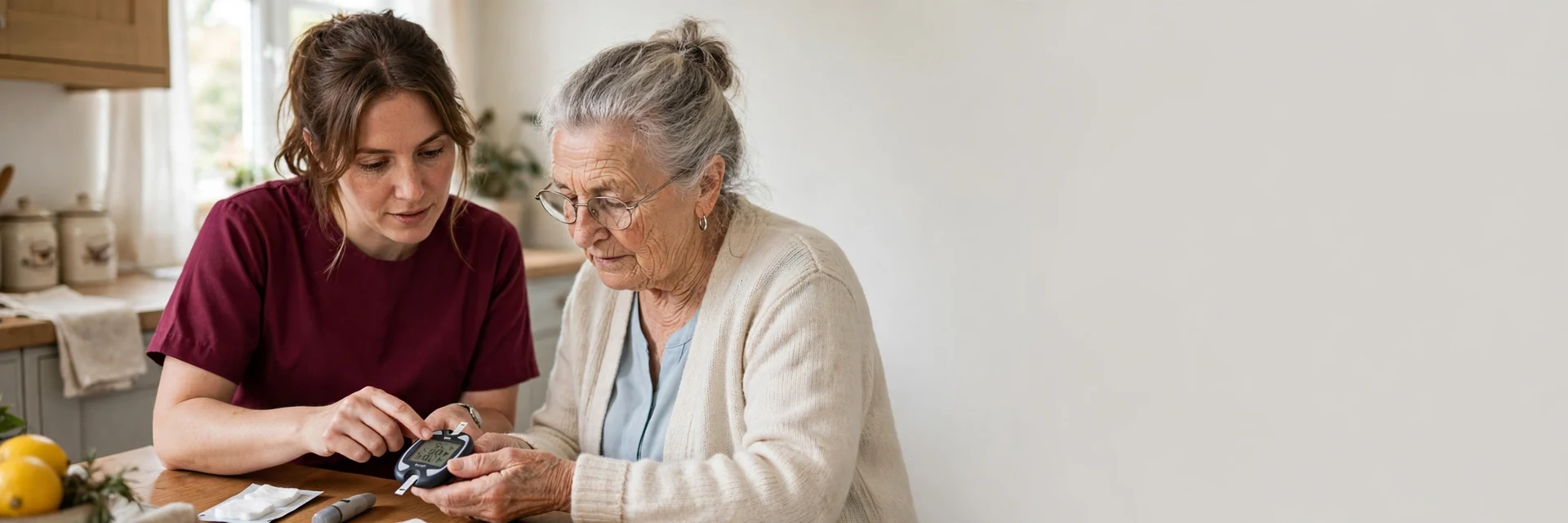
Diabetes care at home means supporting someone with diabetes to manage their blood sugar, medicines, meals, feet and general health in their own home, so they can stay well and avoid problems. For many older people, and for anyone whose eyesight, memory or mobility has changed, keeping on top of diabetes every day can become hard to do alone.
This guide explains why diabetes needs daily attention, eight practical ways to support someone at home, how to spot and treat a low blood sugar (hypo), and the NHS and care at home support available in Wolverhampton.
Why does diabetes care at home matter?
Diabetes UK reports that around 4.6 million people in the UK have a diabetes diagnosis, the highest number on record, and about 90% of them have type 2 diabetes. It also estimates that around 1.3 million more people have type 2 diabetes but have not yet been diagnosed. Diabetes UK analysis has placed the Black Country among the areas of England with the highest rates of diagnosed diabetes.
Over time, high blood sugar can lead to heart attack and stroke, kidney problems, nerve damage and foot problems, and sight loss. The NHS explains that keeping blood sugar within the target range agreed with the healthcare team lowers the risk. Most of that work happens at home, every day, which is why the right routine and support matter so much.
Who might need extra help with diabetes at home?
Many people manage their diabetes well on their own. Extra support can help when someone:
- Forgets medicines or meals, or is not sure whether they have taken a dose.
- Has poor eyesight, shaky hands or arthritis that make blood sugar checks, tablets or insulin pens difficult.
- Lives with dementia, or has had a stroke or another illness that affects memory or planning.
- Has had several hypos, or has recently started insulin or changed medicines.
- Has a foot wound, poor circulation or reduced feeling in their feet.
- Has just come home from hospital and is still getting back to their usual routine.
8 practical ways to support diabetes care at home
1. Take medicines exactly as prescribed
Tablets, insulin and other diabetes medicines work best when taken at the right time, in the right dose and with food where advised. A clear daily routine, a pharmacy blister pack or a medicines chart can help. Never stop or change a diabetes medicine without speaking to the GP, pharmacist or diabetes team. Carers who support with medicines can make sure doses are not missed and report any problems quickly.
2. Keep meals regular and balanced
Missing or delaying meals, or not eating enough carbohydrate, can cause a hypo in people taking insulin or some diabetes tablets. Regular meals with plenty of vegetables, wholegrains and lean protein, and fewer sugary drinks and snacks, help keep blood sugar steadier. Ask the GP about a referral to a dietitian if eating has become difficult, appetite has changed or weight is falling.
3. Check blood sugar if the diabetes team has asked for it
Not everyone with diabetes needs to check their blood sugar at home. If the GP or diabetes team has asked for checks, help the person do them at the agreed times, write down the results or use the meter or app, and know what the target range is. Tell the diabetes team if readings are often outside the range.
4. Know the signs of a hypo and how to treat it
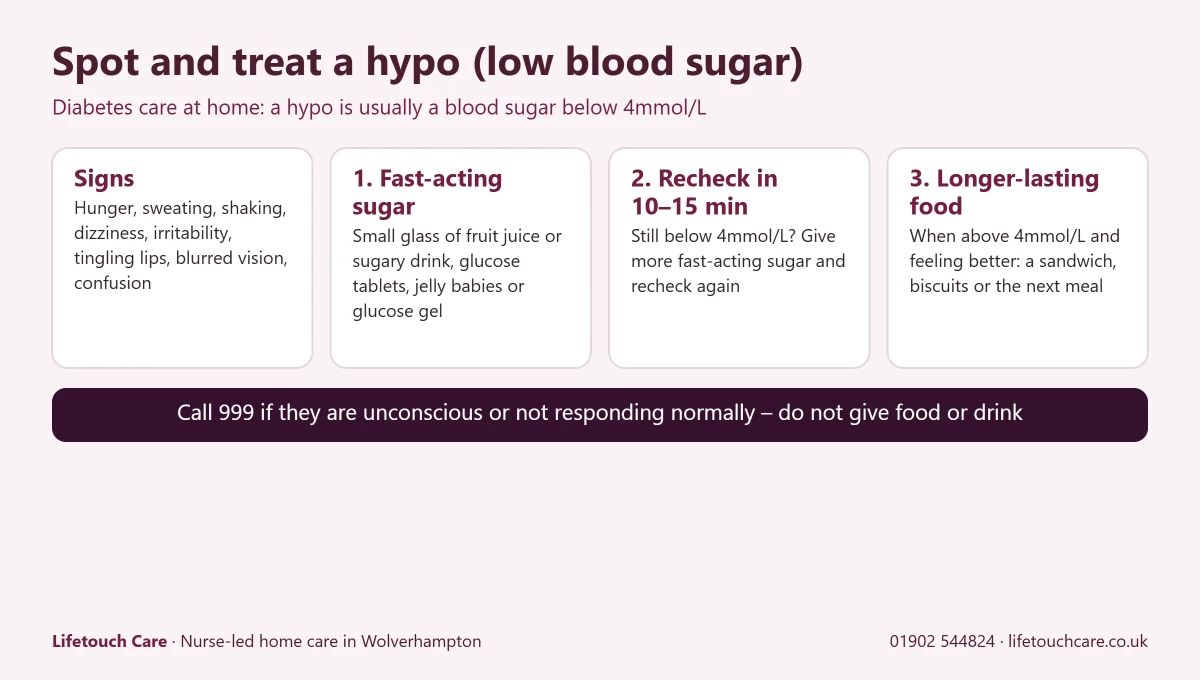
A hypo is when blood sugar drops too low, usually below 4mmol/L. The NHS guide to low blood sugar lists signs such as hunger, sweating, shaking, dizziness, anxiety or irritability, tingling lips, blurred vision and confusion. Treat it straight away with fast-acting sugar, such as a small glass of fruit juice or a sugary fizzy drink, glucose tablets, jelly babies or glucose gel. Recheck after 10 to 15 minutes and repeat if it is still below 4mmol/L. Once it is above 4mmol/L and the person feels better, they should eat something longer-lasting, such as a sandwich, biscuits or their next meal.
5. Watch for signs of high blood sugar
Very high blood sugar can make someone feel unwell too. The NHS lists constant thirst, passing urine more than usual, tiredness and losing weight without trying as common signs. Infections and other illnesses can push blood sugar up. Ask the diabetes team for written advice on what to do on sick days, and contact the GP or NHS 111 if the person is unwell and their blood sugar stays high.
6. Check feet every day
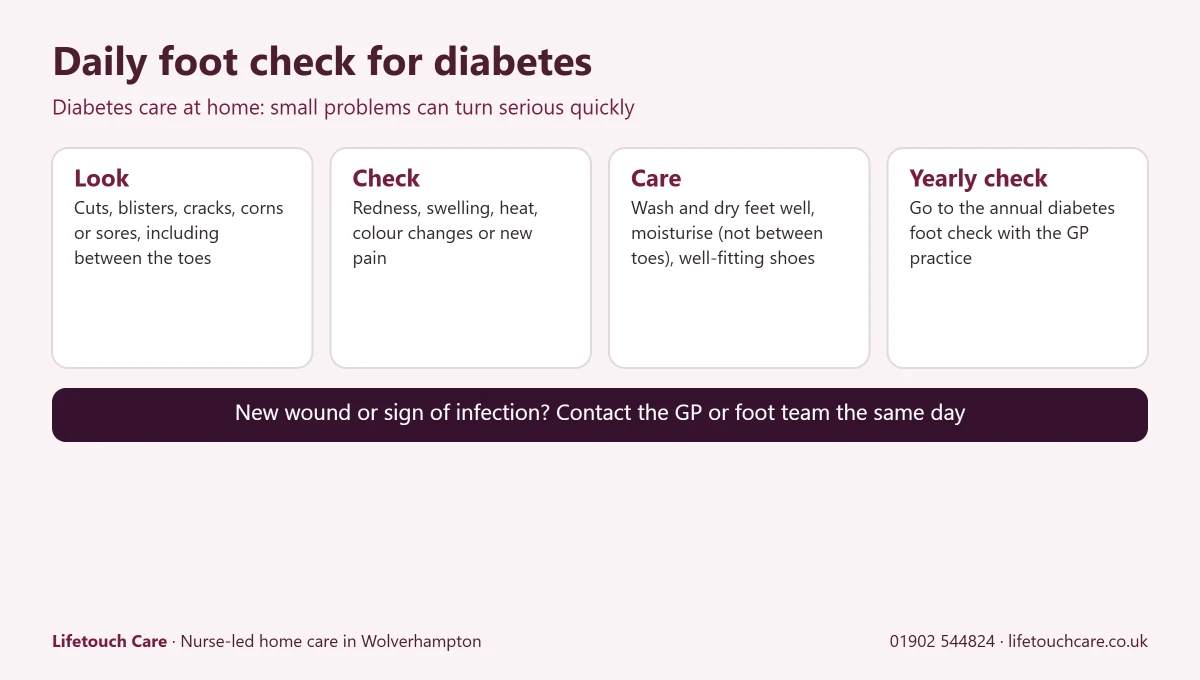
Diabetes can damage the nerves and blood vessels in the feet, so a small cut or blister may go unnoticed and turn into an ulcer or infection. Diabetes UK’s advice on feet is to check them every day and have a foot check every year. Look for cuts, blisters, redness, swelling, heat or changes in colour, wash and dry feet carefully, and wear well-fitting shoes and socks. Get help the same day for any new wound or sign of infection. Our guide to wound care at home explains how wounds are looked after safely.
7. Go to every diabetes health check
Diabetes UK explains that the yearly diabetes review includes nine health checks, such as blood tests, blood pressure, weight, a foot check and eye screening. The NHS offers diabetic eye screening every one to two years. Families can help by keeping a list of appointments, arranging transport and going along to help remember questions. Diabetes UK’s page on the care to expect lists every check.
8. Stay active and look after wellbeing
Gentle activity, such as a daily walk or chair exercises, can help with blood sugar, mood and strength. Living with diabetes can also feel tiring and worrying. If someone seems low, anxious or is struggling to cope, speak to the GP or diabetes team, who can offer support.
Diabetes care at home support in Wolverhampton
The Royal Wolverhampton NHS Trust diabetes team includes doctors, nurses, dietitians and podiatrists, and supports people in hospital, at the Diabetes Centre and in the community. The GP practice usually runs the yearly diabetes review and is the first place to go with questions.
For people who need help with insulin, the trust’s district nursing team carries out around 275 insulin visits a day across the community. In June 2026 the trust described a digital insulin pathway, where suitable patients manage their insulin at home while the district nursing digital team monitors blood sugar remotely and offers teaching and support to patients, relatives and carers. Ask the GP or district nurse whether this is suitable.
Diabetes UK’s helpline on 0345 123 2399 offers free information and support for anyone affected by diabetes.
How can care at home help with diabetes?
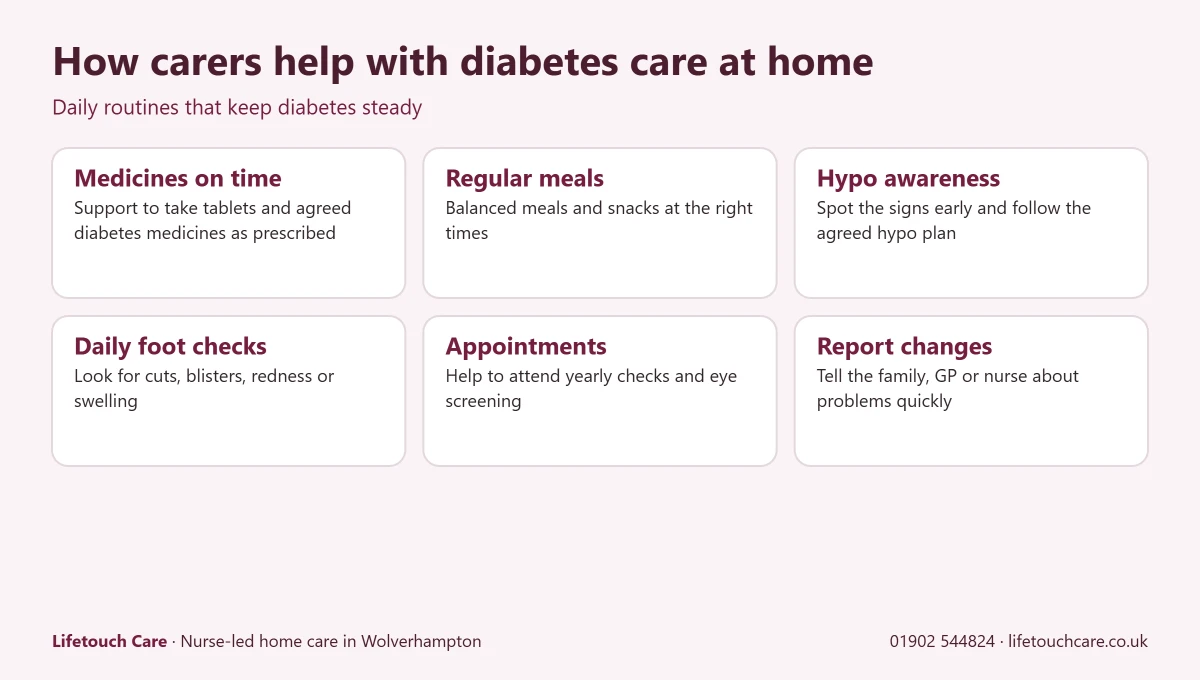
Carers see the person regularly, so they can help with the daily routines that keep diabetes steady and notice early when something is not right, such as a missed meal, a hypo, a sore foot or a change in behaviour. At Lifetouch Care, our nurses carry out an assessment before care begins and agree with the person, their family and the GP or diabetes team what support is needed and when to get help.
Visiting homecare
Visits timed around meals and medicines can make a big difference, for example a morning call for breakfast and tablets and an evening call for a meal and a foot check. Our visiting homecare service is flexible and can change as needs change.
Live-in care
For people who have frequent hypos, live with dementia or need help through the night, live-in care means someone is always there to notice problems and act quickly.
Nurse-led care
Where diabetes sits alongside other conditions, such as heart failure, kidney problems, wounds or a stroke, nurse-led care adds clinical oversight and closer monitoring. Our guides to heart failure care at home and stroke recovery at home cover two conditions that often affect people with diabetes.
Coming home from hospital
Medicines and insulin doses often change during a hospital stay. Our hospital discharge support helps people settle home safely, and our guide to care after hospital discharge covers what to check in the first few days.
Supporting family carers
Helping someone with diabetes every day, and worrying about hypos when you are not there, can be tiring. A hypo can also cause a fall, so our guide to falls prevention at home may help too. Planned respite care can give you a break while your relative’s routine carries on safely at home.
Lifetouch Care: Diabetes Care at Home in Wolverhampton
Lifetouch Care is a CQC-registered, nurse-led home care provider based in Wolverhampton. Our diabetes care at home starts with a nurse-led assessment, and our carers help people take their medicines on time, eat regularly, check their feet and get help quickly if something changes, while keeping families and health professionals informed. We respect each person’s culture, language, faith and food preferences.
To discuss diabetes care at home for yourself or a relative, call 01902 544824 or get in touch online.
Frequently asked questions
What is diabetes care at home?
Diabetes care at home is support in a person’s own home to manage their medicines, meals, blood sugar checks, feet and general health, so they stay well and problems are spotted early.
What are the signs of a hypo?
The NHS lists signs such as hunger, sweating, shaking, dizziness, anxiety or irritability, tingling lips, blurred vision and confusion. Severe hypos can cause a fit or loss of consciousness.
How do you treat a hypo at home?
Give fast-acting sugar such as a small glass of fruit juice, glucose tablets, jelly babies or glucose gel. Recheck blood sugar after 10 to 15 minutes, repeat if it is still below 4mmol/L, then eat something longer-lasting.
When should I call 999 for someone with diabetes?
Call 999 if someone with a very low blood sugar is unconscious or not responding normally and no glucagon is available, they have not recovered within 10 minutes of glucagon, or they have been drinking alcohol.
Why are feet important in diabetes?
Diabetes can damage the nerves and blood vessels in the feet, so small injuries may go unnoticed and become ulcers or infections. Check feet every day and have a foot check every year.
What checks should someone with diabetes have each year?
Diabetes UK explains that the yearly review includes nine health checks, such as blood tests, blood pressure, weight and a foot check. Eye screening is offered every one to two years.
Can home carers help with diabetes medicines?
Yes. Carers can help people take their diabetes medicines at the right time and report missed doses or side effects. Any help with insulin is agreed with the GP, district nurse or diabetes team and given only by trained staff.
Who provides diabetes support in Wolverhampton?
The GP practice usually runs the yearly review. The Royal Wolverhampton NHS Trust has a diabetes team of doctors, nurses, dietitians and podiatrists, and district nurses support people who need help with insulin.
Can diabetes cause falls?
Yes. A hypo can cause dizziness and confusion, and nerve damage or poor eyesight can affect balance. Regular meals, medicine reviews and daily foot checks help reduce the risk.
How can families in Wolverhampton arrange diabetes care at home?
Contact Lifetouch Care on 01902 544824 or through our contact page to arrange a nurse-led assessment and discuss the support your relative needs.