


Lifetouch Care · Wolverhampton
How Can Stroke Recovery at Home Be Supported in Wolverhampton?
Stroke recovery at home is the stage when someone who has had a stroke carries on rebuilding their strength, skills and confidence in their own surroundings after leaving hospital. Coming home is a big step. Families often feel relieved and worried at the same time, because a stroke can change how a person moves, speaks, eats, thinks and feels almost overnight.
This guide explains how a stroke can affect daily life, eight practical ways to support stroke recovery at home, the warning signs of another stroke, and the NHS and care at home support available in Wolverhampton.
Why does stroke recovery at home matter?
The Stroke Association reports that around 100,000 people in the UK have a stroke each year, and that there are around 1.3 million stroke survivors living in the UK. Many of them leave hospital with ongoing needs, and much of their recovery happens at home.
The NHS explains that some people recover within days or weeks, but for others recovery can take months or years. The brain can keep relearning skills long after the first few weeks, so regular practice, encouragement and the right support at home really matter. NICE guidance on stroke rehabilitation recommends that people who need it are offered rehabilitation for at least 3 hours a day, on at least 5 days a week, covering therapies such as physiotherapy, occupational therapy and speech and language therapy, in hospital or at home.
How can a stroke affect daily life?
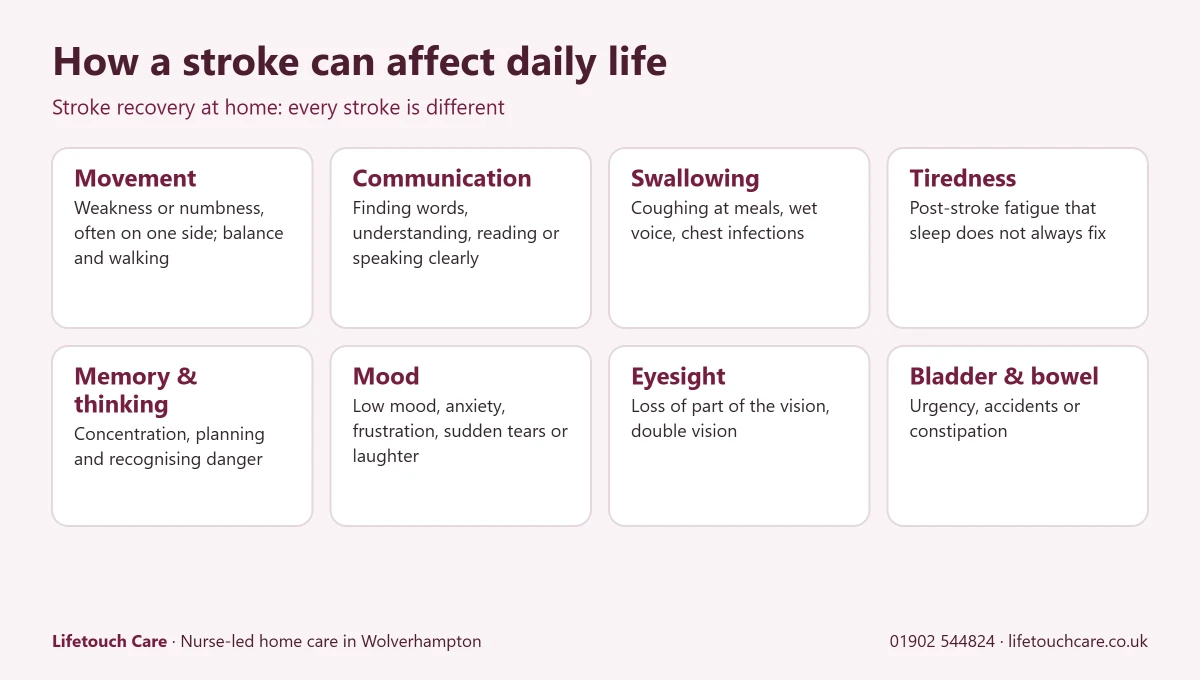
Every stroke is different, depending on which part of the brain was affected. Common effects include:
- Weakness or numbness, often on one side of the body, which can affect walking, balance and using one hand.
- Communication problems, such as difficulty finding words, understanding speech, reading or speaking clearly.
- Swallowing difficulties (dysphagia), which can make eating and drinking unsafe without the right advice.
- Extreme tiredness (post-stroke fatigue), which is not always helped by sleep.
- Memory, thinking and concentration changes, and problems with planning or recognising danger.
- Emotional changes, including low mood, anxiety, frustration or crying and laughing unexpectedly.
- Eyesight changes, and bladder or bowel problems.
8 practical ways to support stroke recovery at home
1. Practise the rehabilitation plan every day
When someone leaves hospital, the NHS says the healthcare team should create a home recovery plan. It may include physiotherapy exercises, activities for memory and concentration, and exercises for speech, swallowing and vision. Little and often works best. Carers and family can help the person practise between therapy visits, for example standing practice, using the weaker hand during washing and dressing, or speech exercises set by the therapist. Always follow the therapist’s advice rather than inventing new exercises.
2. Make the home safe and easy to move around
Weakness, poor balance and changes to vision or judgement make falls more likely after a stroke. An occupational therapist can recommend equipment such as grab rails, a perching stool, a raised toilet seat or a bed downstairs. Keep floors clear, improve lighting and keep everyday items on the person’s stronger side. Our guide to falls prevention at home has a room-by-room checklist.
3. Support safe eating, drinking and swallowing
If a speech and language therapist has given advice about softer foods or thickened drinks, follow it at every meal and drink. Sit the person upright, let them eat slowly and stay upright for a while afterwards. Coughing or choking during meals, a wet or gurgly voice, or repeated chest infections can be signs of swallowing problems, so tell the GP or therapist straight away. Some people need tube feeding for a time; our guide on arranging enteral feeding care at home explains how this works.
4. Help with communication
Communication difficulties can be very frustrating. Speak clearly, give the person time, ask one question at a time and use questions with yes or no answers when words are hard to find. Pictures, gestures, writing and communication aids can all help. Try not to finish sentences for them unless they want you to, and include them in conversations and decisions.
5. Plan the day around tiredness
Post-stroke fatigue is common and can last a long time. Spread activities through the day, build in rest breaks, and do the most demanding tasks, such as showering or exercises, when the person has the most energy. Tell the GP if tiredness is severe or getting worse, as medicines, mood, sleep or other conditions can play a part.
6. Look after mood and emotional wellbeing
Low mood, anxiety and loss of confidence are common after a stroke, for both the person and their family. NICE notes that stroke can cause mental health problems such as anxiety and depression, and the NHS lists talking therapy such as CBT as part of recovery. Watch for withdrawal, loss of interest, poor sleep or tearfulness, and speak to the GP. Keeping in touch with friends, faith communities and familiar routines helps too.
7. Take medicines and lower the risk of another stroke
After a stroke, people are usually prescribed medicines to reduce the risk of another one, such as treatment for blood pressure, cholesterol or blood clots. Take them exactly as prescribed and never stop a medicine without advice. Stopping smoking, eating well, cutting down on alcohol, staying as active as possible and attending blood pressure checks all help. Carers who support with medicines can make sure doses are not missed and report side effects quickly.
8. Care for skin, continence and a weak arm or leg
Someone who spends a lot of time sitting or in bed, or has bladder or bowel problems, is at risk of pressure ulcers. Change position regularly, keep skin clean and dry, and check heels, hips and the base of the spine every day; our guide to the early signs of pressure ulcers shows what to look for. A weak arm should be supported on a pillow or armrest and never pulled when helping someone move, as this can cause shoulder pain. Ask the physiotherapist to show you safe ways to help.
What are the warning signs of another stroke?
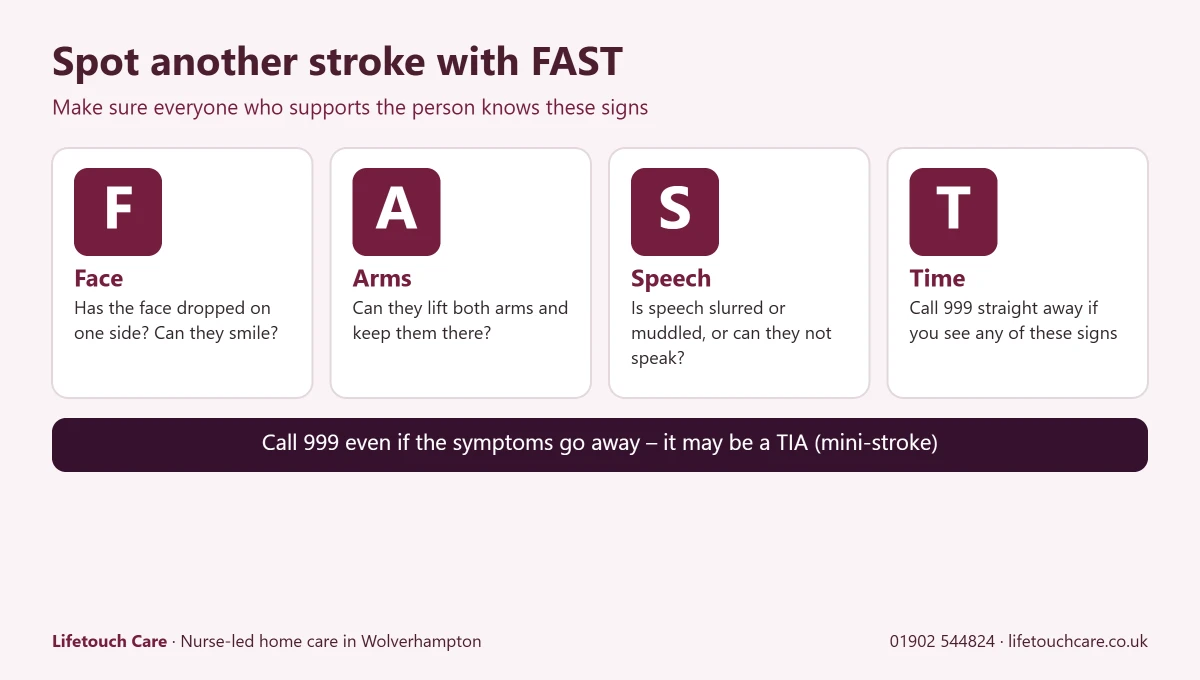
A stroke is a medical emergency. Use the FAST test:
- Face: has their face dropped on one side? Can they smile?
- Arms: can they lift both arms and keep them there?
- Speech: is their speech slurred or muddled, or can they not speak?
- Time: call 999 straight away if you notice any of these signs.
Other sudden signs can include loss of vision, severe dizziness, confusion or a sudden very bad headache. If symptoms go away within minutes, it may have been a transient ischaemic attack (TIA or mini-stroke), which is a warning sign. Still call 999 or get urgent medical advice. Make sure everyone who supports the person, including carers and visitors, knows FAST.
Can someone drive during stroke recovery at home?
According to GOV.UK guidance on stroke and driving, car and motorbike drivers must stop driving for at least one month after a stroke, and can restart only when their doctor says it is safe. If problems such as limb weakness, eyesight changes, or problems with balance, memory or understanding are still present after a month, they must tell the DVLA. Bus and lorry drivers have stricter rules. Ask the GP or stroke team if you are unsure.
Stroke recovery at home support in Wolverhampton
The Royal Wolverhampton NHS Trust provides stroke care at New Cross Hospital and, after discharge, supports people through its Early Supported Discharge (ESD) team and Community Stroke Team. ESD helps people go home sooner while their rehabilitation carries on at home; the trust’s leaflet gives the ESD number as 01902 445921. Community Stroke Specialists based at West Park Hospital (01902 576441) offer longer-term follow-up.
In January 2026 the trust announced plans with Walsall Healthcare to bring early supported discharge and community stroke rehabilitation together into one Integrated Community Stroke Service, with specialist rehabilitation seven days a week, mainly in people’s own homes. Service names and phone numbers may change as this develops, so check with the stroke team or GP for the current route.
The NHS says people should have a review around six months after their stroke; if this does not happen, ask the stroke team or GP. The Stroke Association helpline on 0303 3033 100 offers free information and can tell you about local support groups. The NHS stroke recovery pages also explain the different therapies.
How can care at home help with stroke recovery?
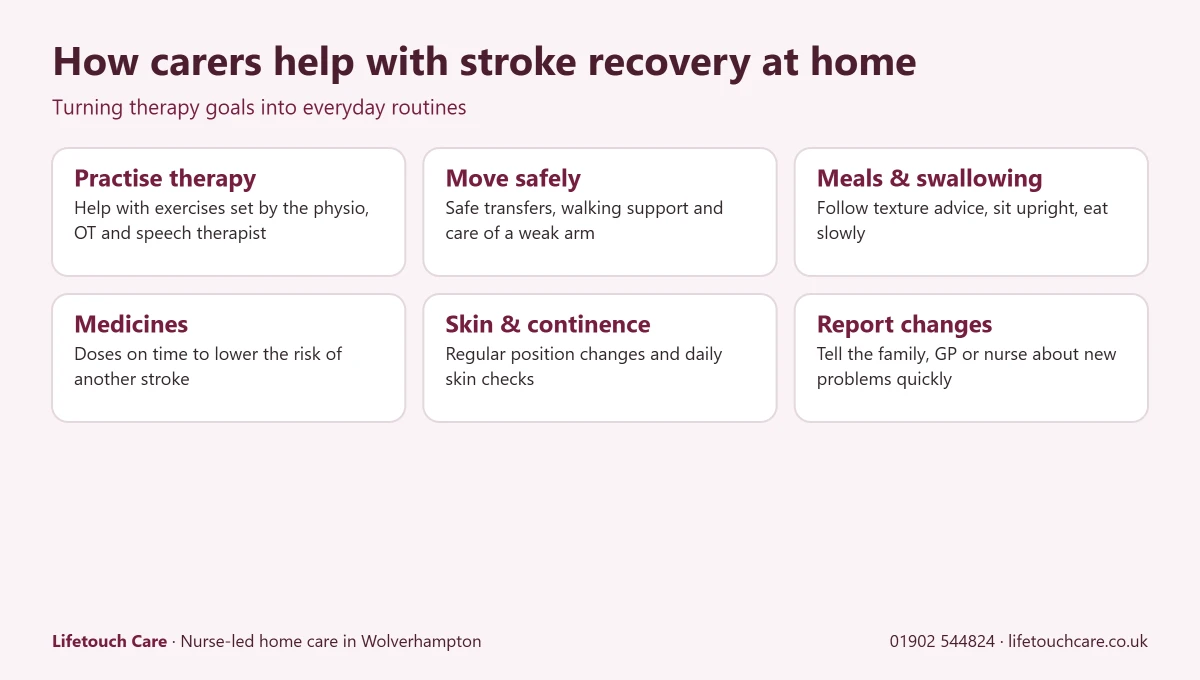
NHS therapists visit for set sessions, but recovery happens all day, every day. Professional carers help turn therapy goals into daily routines, keep the person safe and notice changes early. At Lifetouch Care, our nurses carry out an assessment before care begins and work alongside the stroke team, GP and family so everyone follows the same plan.
Visiting homecare
Regular visits can help with washing, dressing, meals, medicines and practising exercises, at times that suit the person’s energy levels. Our visiting homecare service is flexible and can increase or reduce as recovery progresses.
Live-in care
For people with significant weakness, communication or memory problems, or who need help at night, live-in care means someone is always there to help with moving safely, toileting and reassurance.
Nurse-led care
Where someone has complex needs after a stroke, such as tube feeding, catheter care, pressure ulcer risk or several long-term conditions, nurse-led care adds clinical oversight and closer monitoring. Our guide to brain injury care at home explains how specialist support helps everyday independence.
Coming home from hospital
The first days after discharge can feel overwhelming. Our hospital discharge support helps people settle home safely, and our guide to care after hospital discharge covers what to arrange.
Supporting family carers
Caring for someone after a stroke can be rewarding but also tiring and lonely, and the NHS encourages carers to get the support they need. Family carers in Wolverhampton can ask the council for a carer’s assessment; our guide on using a carer’s assessment to access respite care explains how. Planned respite care can give you a break while your relative continues their recovery at home.
Lifetouch Care: Stroke Recovery at Home in Wolverhampton
Lifetouch Care is a CQC-registered, nurse-led home care provider based in Wolverhampton. Our stroke recovery at home support starts with a nurse-led assessment, and our carers help people practise their therapy goals, move safely, eat and drink safely and take their medicines, while keeping families and health professionals informed. We respect each person’s culture, language, faith and food preferences.
To discuss stroke recovery at home for yourself or a relative, call 01902 544824 or get in touch online.
Frequently asked questions
What is stroke recovery at home?
Stroke recovery at home is the rehabilitation and support someone receives in their own home after a stroke, to rebuild movement, communication, daily living skills and confidence, and to lower the risk of another stroke.
How long does stroke recovery take?
It varies. The NHS says some people recover within days or weeks, while for others recovery can take months or years. Many people keep improving long after leaving hospital.
How much rehabilitation should someone get after a stroke?
NICE recommends that people who need it are offered rehabilitation for at least 3 hours a day on at least 5 days a week, covering a range of therapies, in hospital or at home.
What is early supported discharge for stroke?
Early supported discharge lets suitable stroke patients leave hospital sooner while a specialist team continues their rehabilitation at home. In Wolverhampton it is provided by the Royal Wolverhampton NHS Trust.
What are the signs of another stroke?
Use FAST: face dropping on one side, arm weakness, slurred or muddled speech, and time to call 999. Call 999 even if the symptoms go away.
How can I help someone with communication problems after a stroke?
Speak clearly, give them time, ask one question at a time, use yes or no questions, and try pictures, gestures or writing. Follow the speech and language therapist’s advice.
Is tiredness normal after a stroke?
Yes. Post-stroke fatigue is common and can last a long time. Pacing activities and planning rest helps. Tell the GP if it is severe or getting worse.
Can someone drive after a stroke?
Car drivers must stop driving for at least one month and restart only when their doctor says it is safe. They must tell the DVLA if problems that could affect driving remain after a month.
Can home carers help with stroke rehabilitation?
Yes. Carers help people practise exercises set by therapists, move safely, eat and drink safely, take medicines and manage daily routines, and they report changes quickly.
How can families in Wolverhampton arrange stroke recovery at home?
Contact Lifetouch Care on 01902 544824 or through our contact page to arrange a nurse-led assessment and discuss the support your relative needs.