



Lifetouch Care · Wolverhampton
How Can Care After Hospital Discharge Help Someone Recover Safely at Home in Wolverhampton?
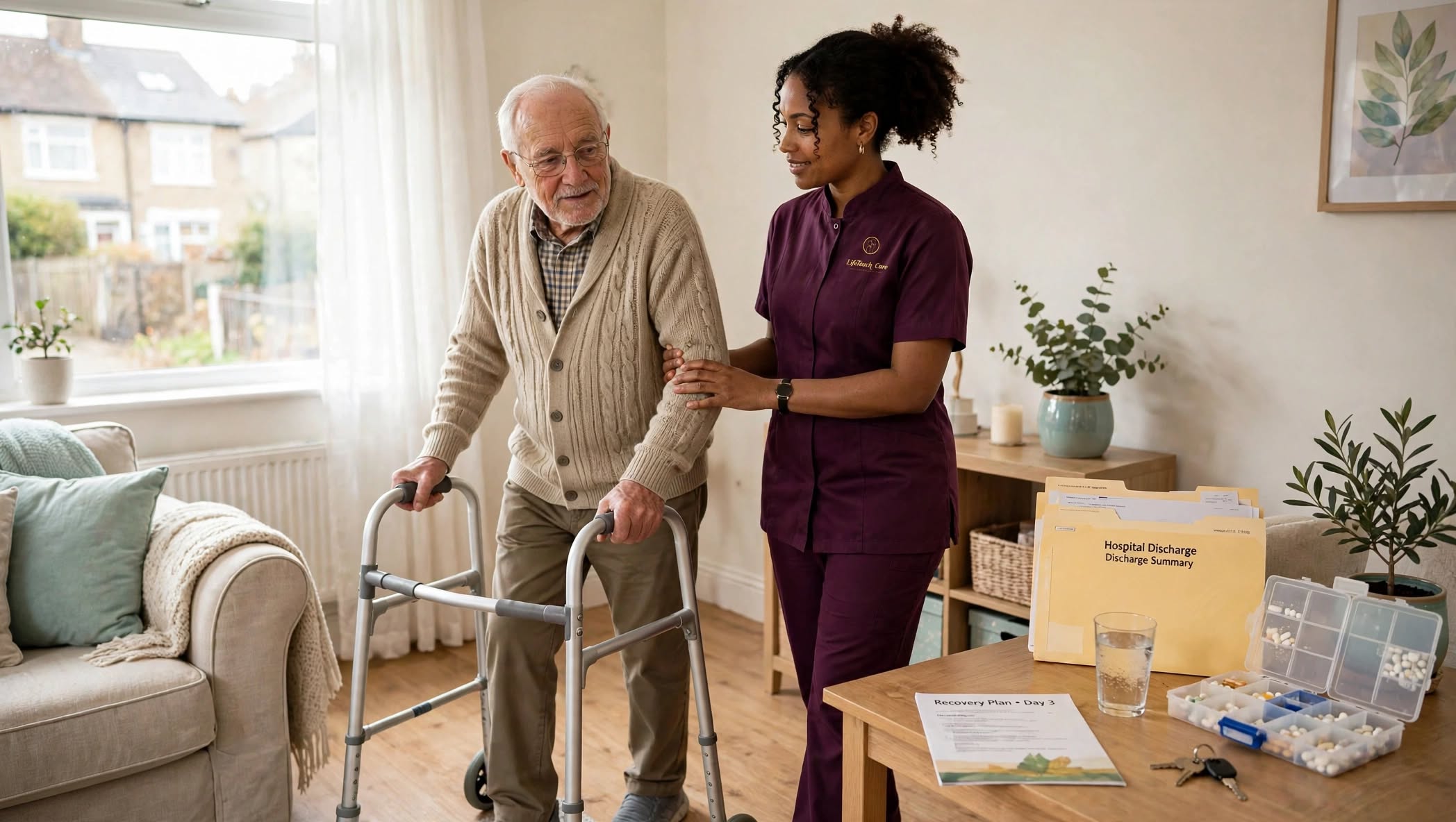
Care after hospital discharge helps people rebuild strength, confidence and independence once they are back in their own home. Coming home is a relief, but the first few weeks can feel harder than families expect. Many people leave hospital weaker than they went in, with new medicines, new equipment or a changed routine. The right support at home during this time can make recovery smoother and reduce the chance of going back into hospital.
Our earlier guide covered what care should be arranged before leaving hospital. This guide picks up from the moment your relative arrives home. It explains what to expect in the first days and weeks, how free short-term reablement works in Wolverhampton, the warning signs to watch for, and what happens when short-term support ends.
Why does care after hospital discharge matter?
Even a short hospital stay can affect an older person’s strength, balance and appetite. Time spent in bed or sitting in a chair on a ward can lead to muscle loss, and some people come home more tired, unsteady or confused than before. Medicines are often started, stopped or changed during an admission, and the discharge letter may not match the tablets still in the cupboard at home.
Most people recover best at home, among familiar surroundings and routines. But recovery rarely happens in a straight line. Good care after hospital discharge gives someone a safe structure while they get back on their feet, and gives families confidence that small problems will be noticed early.
What should happen in the first 48 hours at home?
The first two days are when gaps in the plan usually show up. Whether care is arranged by the council, the NHS or privately, these are the checks that matter most:
- Medicines: compare the discharge letter with what is in the house. Put away any stopped medicines so they are not taken by mistake, and make sure the first doses of new medicines are not missed.
- Food and drink: check there is easy food in the house and that your relative can reach and prepare it, or that carers will.
- Toileting and the first night: think through how your relative will get to the toilet safely, especially overnight, and whether a commode, urinal or night light is needed.
- Moving around: make sure walking aids are within reach and set at the right height, and that rugs and clutter are out of the way.
- Warmth and contact: the heating should be on, a phone should be within reach, and everyone should know who to call with a question.
Keep the hospital discharge letter somewhere easy to find. It usually lists the diagnosis, medicines, follow-up plans and a ward or discharge team number you can ring in the first few days if something is unclear.
What free care after hospital discharge is available in Wolverhampton?
Many people are offered short-term care to help them recover after leaving hospital. The NHS calls this intermediate care, and it is also known as rehabilitation, reablement and recovery services. In England, if you are eligible for intermediate care or reablement, it should be free for up to six weeks. It often lasts less, sometimes just one or two weeks, depending on how quickly someone reaches their goals.
In Wolverhampton, discharge from hospital follows a “Discharge to Assess” approach, which means longer-term care decisions are made after someone leaves the acute hospital rather than on the ward. City of Wolverhampton Council’s Home Assisted Reablement Programme (HARP) provides short-term reablement in people’s own homes. Reablement workers help people relearn everyday tasks such as washing, dressing and making a drink, rather than doing everything for them. You can read more on the NHS page on care after a hospital stay and the City of Wolverhampton Council’s Discharge to Assess page.
Free reablement may not cover everything a family needs. It may not include longer visits, companionship, overnight help or support with complex clinical needs. Some families choose to arrange private care after hospital discharge alongside it, or straight away if their relative is not eligible or the service has no capacity.
6 ways care after hospital discharge supports recovery
1. Keeping medicines safe and on track
Medicine changes are one of the most common reasons for problems after discharge. Carers can prompt or give medicines as set out in the care plan and record each dose. Ask the hospital whether your relative has been referred to the NHS Discharge Medicines Service, where a local community pharmacist checks that new medicines are understood and match the discharge plan. Never stop or change a prescribed medicine without asking the GP or pharmacist.
2. Rebuilding strength and mobility
If a physiotherapist or occupational therapist has given exercises, carers can encourage your relative to do them little and often. Being gently active each day, such as walking to the kitchen, sitting out of bed for meals and getting dressed, helps rebuild muscle and confidence. Good care after hospital discharge supports people to do things for themselves where they safely can, instead of taking over.
3. Preventing falls
The weeks after a hospital stay are a higher-risk time for falls, especially if someone is weaker, on new medicines or getting up at night. Good lighting, clear walkways, well-fitting footwear and equipment within reach all help. If your relative falls or nearly falls, tell the care team and GP so the cause can be looked at.
4. Eating and drinking well
Appetite is often poor after illness, but food and fluids are essential for healing and energy. Small, frequent meals and snacks, regular drinks and help with shopping or cooking can make a big difference. Carers can keep a simple note of what is eaten and drunk so changes are spotted early.
5. Protecting skin and continence
People who are less mobile after a hospital stay are at higher risk of pressure damage. Carers can help with regular changes of position, keeping skin clean and dry, and checking heels, hips and the base of the spine during personal care. New continence problems should be reported rather than assumed to be permanent, as many improve with the right support.
6. Supporting confidence and mood
It is common to feel low, anxious or unsettled after a hospital stay. Some people lose confidence about being alone or going outside. A familiar carer, a steady routine and time to talk can help. Let the GP know if low mood lasts or your relative seems withdrawn.
What warning signs should families report after discharge?
Contact the GP, the discharge team or NHS 111 promptly if your relative has:
- new or worsening confusion, drowsiness or agitation
- increasing breathlessness, or a cough or temperature that is not settling
- a wound that is red, hot, swollen, leaking or more painful
- not eating or drinking, or passing much less urine
- new swelling in the legs or ankles, or sudden weight gain if they have a heart condition
- a fall, or a big drop in how well they can move
Call 999 in an emergency, such as chest pain, severe difficulty breathing, signs of a stroke, or if someone cannot be woken. People living with long-term conditions may also have a specialist team to call. For example, our guide to heart failure care at home explains which symptoms to report to the heart failure team.
Which type of care after hospital discharge is right for your relative?
Visiting homecare
For many people, a few visits a day to help with washing, dressing, meals and medicines is enough while they recover. Our visiting homecare service can start with more support and reduce as your relative becomes more independent.
Nurse-led care
If someone comes home with complex needs, such as a catheter, a feeding tube, wound care or a long-term condition that needs close monitoring, nurse-led care adds clinical oversight. Registered nurses assess needs, write the care plan, and train and supervise carers. Families supporting someone home after a brain injury may also find our guide to support after a brain injury hospital discharge helpful.
Live-in care
If your relative needs help day and night, or is anxious being alone after a hospital stay, live-in care provides continuous support from a consistent carer.
Respite care
If a family member is the main carer, planned respite care at home gives them time to rest while their relative’s recovery stays on track.
What happens when short-term care ends?
Towards the end of a reablement or intermediate care period, staff should review progress with your relative and family. Some people no longer need help. Others still need some support, and a care needs assessment and financial assessment will decide what the council can provide and whether there is a charge. Age UK’s guide to getting help after hospital discharge explains this in more detail.
Ask early when the review will be, and who to contact if needs change before then. Planning ahead avoids a sudden gap in support when free care stops. If you are arranging care privately, a good provider will review the care plan regularly and adjust visits as your relative improves. Our guide on how often visiting homecare should be arranged can help you decide what level of support is needed.
Lifetouch Care: Care After Hospital Discharge in Wolverhampton
Lifetouch Care is a CQC-registered, nurse-led home care provider based in Wolverhampton. Our hospital discharge support helps people settle safely in the first days home and rebuild their independence over the weeks that follow. We review care one week after it starts, again at two weeks, and then at least monthly, or sooner if needs change, so support keeps pace with recovery. We bring cultural understanding to every visit and respect each person’s culture, language, faith and food preferences.
To discuss care after hospital discharge for yourself or a relative, call 01902 544824 or get in touch online. If a discharge date has been set, it helps to contact us as early as possible.
Frequently asked questions
What is care after hospital discharge?
It is support at home that helps someone recover after a hospital stay, including help with personal care, medicines, meals, mobility and spotting early signs that recovery is not going well.
Is care after hospital discharge free?
If you are eligible for reablement or intermediate care in England, it should be free for up to six weeks. Care after that may be means-tested, and private care can be arranged at any time.
What is reablement?
Reablement is short-term support that helps people relearn everyday tasks, such as washing, dressing and preparing food, so they can be as independent as possible at home.
Who provides reablement in Wolverhampton?
City of Wolverhampton Council’s Home Assisted Reablement Programme (HARP) provides short-term reablement at home. The hospital discharge team will tell you if it has been arranged.
What if free reablement is not available straight away?
Ask the discharge team what interim support is planned. Some families arrange private care so their relative is not left without help.
Can private care work alongside reablement?
Yes. Private carers can add longer visits, companionship or overnight help that reablement may not cover. Let both services know about each other.
What should we do if the medicines at home do not match the discharge letter?
Do not guess. Contact the ward, the GP or a community pharmacist for advice before giving the next dose.
What warning signs should we report after discharge?
New confusion, worse breathlessness, a fever, a red or leaking wound, eating or drinking very little, new leg swelling, or a fall. Call 999 in an emergency.
How long does recovery at home usually take?
It varies. Many people regain much of their independence within a few weeks, but others need longer-term support. Regular reviews help match care to progress.
How can families in Wolverhampton arrange care after hospital discharge?
Contact Lifetouch Care on 01902 544824 or through our contact page to arrange a nurse-led assessment, ideally before the discharge date.