


Spinal Injury Care at Home in Wolverhampton
Lifetouch Care is a nurse-led home care provider specialising in spinal cord injury and complex clinical care, giving families across Wolverhampton and the West Midlands confidence in the care their loved one receives at home.
Understanding spinal injury care
What is spinal injury care at home?
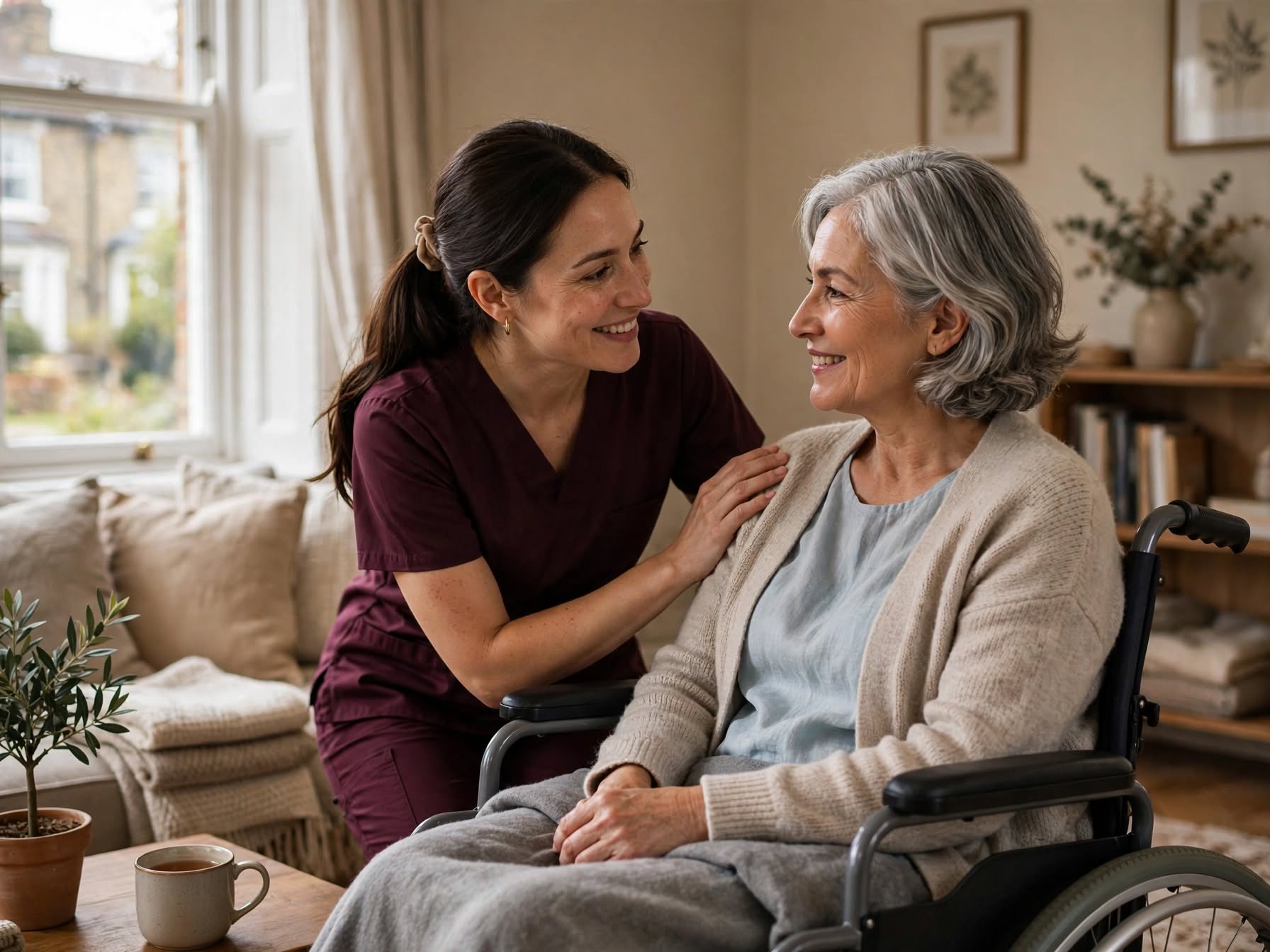
Spinal injury care at home is specialised clinical and personal support for individuals living with spinal cord injuries or spinal trauma that affects mobility, independence, and daily living. This type of care involves mobility assistance, personal care support, rehabilitation assistance, continence care, pressure sore prevention, medication management, and ongoing healthcare monitoring within the home environment.
Unlike standard domiciliary care, spinal injury care requires clinical oversight and specialist training to safely manage complex mobility needs, transfers, positioning, neurological conditions, respiratory complications, continence management, and long-term rehabilitation support.
Spinal cord injuries are usually described by their level and completeness. A cervical (neck) injury can result in tetraplegia, affecting movement and sensation in the arms, hands, trunk and legs, while a thoracic or lumbar injury more often causes paraplegia, affecting the trunk and legs. An injury may also be complete, with no function below the level of injury, or incomplete, where some sensation or movement remains. The level and completeness of injury shape the exact mix of clinical and personal support a person needs at home, from full nursing oversight to lighter-touch reablement support.
Spinal injury care is often required by individuals recovering from traumatic injuries, accidents, neurological conditions, surgery, or long-term spinal disorders. Receiving professional care at home allows individuals to remain comfortable in familiar surroundings while promoting independence, dignity, and quality of life — often alongside NHS or community rehabilitation teams already involved in a person’s care.
Who benefits from spinal injury care?
- Individuals recovering after spinal injury hospital treatment
- Adults living with spinal cord injuries
- Adults living with paralysis or reduced mobility
- People requiring catheter and continence support
- Individuals needing pressure sore prevention care
Mobility & transfers
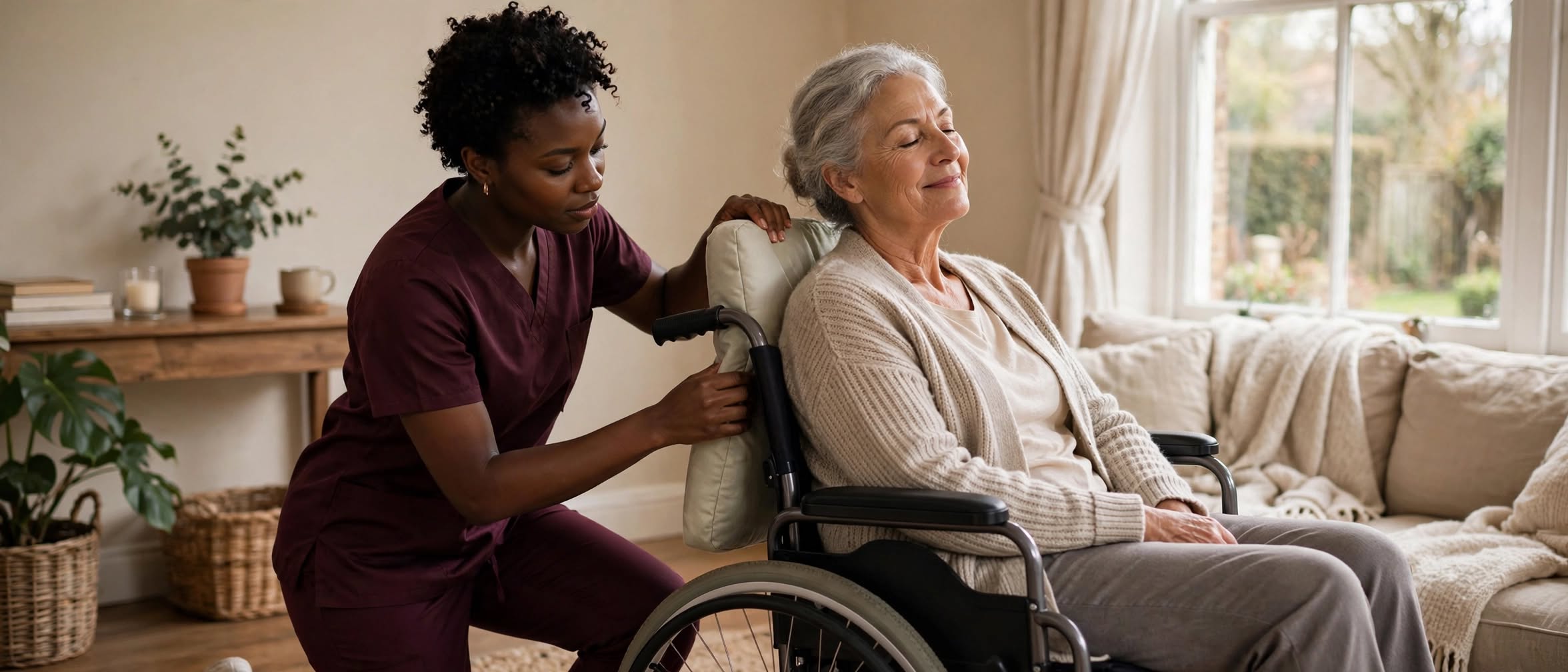
Safe use of hoists, slide sheets and wheelchairs, with careful repositioning to protect joints and skin.
Pressure area & skin care
Regular skin checks and repositioning schedules that reduce the risk of pressure sores developing.
Bladder & bowel management
Structured continence care, including catheter care where needed, to support comfort and dignity.
Spasticity & pain management
Monitoring muscle tone and pain, and supporting prescribed medication and positioning routines.
Respiratory support
Monitoring breathing and, for higher-level injuries, supporting tracheostomy or ventilator care.
Medication management
Administering and monitoring medication safely, in line with the person’s care plan.
Rehabilitation liaison
Working alongside physiotherapists, occupational therapists and other specialists on rehabilitation goals.
Emotional & psychological support
Recognising the emotional impact of spinal injury, with consistent, familiar support for the person and their family.
Autonomic dysreflexia: a spinal injury emergency to know
Autonomic dysreflexia (AD) is one of the most serious complications associated with spinal cord injury, and recognising it quickly is a core part of safe, nurse-led spinal injury care at home.
A sudden, dangerous spike in blood pressure, triggered by a stimulus below the level of injury — often something as ordinary as a full bladder. It occurs mostly in people with a spinal cord injury at or above the sixth thoracic vertebra (T6), and is a medical emergency that needs an immediate response.
Common triggers
- A full or blocked bladder — including a blocked or kinked catheter
- A full bowel or constipation
- Skin irritation — pressure sores, tight clothing, or an ingrown toenail
- Other painful or irritating stimuli below the level of injury that may not otherwise be felt
Signs to watch for
- A sudden, pounding headache
- A sudden rise in blood pressure
- Flushed or blotchy skin, and sweating, above the level of injury
- Goosebumps, and a slower heart rate, below the level of injury
- Blurred vision, nasal congestion, or a sense that something is wrong
How our nurse-led teams respond
Lifetouch Care nurses and trained carers are taught to recognise the early signs of autonomic dysreflexia and respond immediately — sitting the person upright to help lower blood pressure, loosening any tight clothing, and checking for and addressing the most common triggers first, starting with the bladder and catheter. Blood pressure is monitored throughout, and if symptoms don’t settle quickly, emergency medical help is called without delay.
Spinal injury & complex home care services
Every care package is planned and led by registered nurses, built around the person, their family, and their goals.
Spinal cord injury care
Tailored, one-to-one support for people living with spinal cord injury — mobility and positioning, pressure area care, bladder and bowel management, and rehabilitation goals, delivered at home in Wolverhampton.
Complex clinical care
Tracheostomy care, ventilator support, PEG and enteral feeding, catheter care, wound management, and medication administration — delivered safely and confidently at home.
Nurse-led care teams
Every package is designed and overseen by a registered nurse, working closely with case managers, GPs and specialist clinicians to keep care consistent and clinically sound.
24-hour & live-in care
Flexible care packages, from a few hours a week to full 24-hour and live-in nursing care, so support grows or steps back as it’s actually needed.
Our other care services
Lifetouch Care provides a full range of specialist home care services, all delivered by trained carers under the supervision of NMC-registered nurses.

“Complex and spinal injury care should feel like care from someone who knows you — not a rotating list of unfamiliar faces.” Every Lifetouch Care package is led by a registered nurse from day one.
Spinal injury & complex care at home — FAQs

What is nurse-led spinal injury care at home?
Nurse-led spinal injury care means every care plan is designed and overseen by a registered nurse, not just carried out by a general carer. At Lifetouch Care this covers mobility and positioning, pressure area care, bladder and bowel management, and rehabilitation support, delivered in the person’s own home in Wolverhampton and the surrounding West Midlands.
Do you provide 24-hour and live-in care for complex needs?
Yes. Lifetouch Care packages are flexible, ranging from a few hours a week to full 24-hour and live-in care, so support can increase or reduce as needs change.
What complex clinical care can Lifetouch Care nurses provide at home?
Our registered nurses provide tracheostomy care, ventilator support, PEG and enteral feeding, catheter care, wound management and medication administration, all delivered safely at home.
What is autonomic dysreflexia and how is it managed?
Autonomic dysreflexia is a sudden, dangerous spike in blood pressure triggered by a stimulus below the level of injury, such as a full bladder, and occurs mostly in people with a spinal cord injury at or above T6. It is a medical emergency. Our nurses and trained carers are taught to recognise the early signs, respond immediately, and call for emergency help if symptoms don’t settle quickly — see our autonomic dysreflexia guide above for more detail.
What other specialist care services does Lifetouch Care offer?
Alongside spinal injury and complex clinical care, our trained carers — supervised by NMC-registered nurses — also support tracheostomy care, ventilator care, nebulisation, catheter care, stoma care, IV therapy, complex end-of-life care, dementia care, mental health support, eating disorder support, physical disability support, sensory impairment support, and personal and daily living care.
Which areas do you cover?
Lifetouch Care is based in Wolverhampton and provides nurse-led home care across the surrounding West Midlands. Contact us to check availability in your area.
Caring for Wolverhampton and the West Midlands
Lifetouch Care provides nurse-led home care across Wolverhampton and the surrounding West Midlands. Get in touch and we’ll let you know straight away whether we can support you in your area.
Check coverage in your areaTalk to us about care at home
Whether you’re planning care for a family member or you’re a case manager looking for a nurse-led provider in Wolverhampton, we’re happy to talk through what’s needed.