

Wound & Pressure Ulcer
Pressure Ulcer Prevention
Preventing skin breakdown in the community relies on simple, consistent routines that protect the skin before damage occurs. Regular risk assessments, daily skin checks, and attention to bony areas help staff spot early changes, especially in people with reduced mobility, incontinence, or long‑term conditions. Managing moisture with barrier products, maintaining good nutrition and hydration, and supporting safe repositioning all reduce pressure and friction on vulnerable skin. When wounds are present, nurses assess the size, depth, tissue type, and moisture levels, choose dressings that maintain balance without causing maceration, and monitor for signs of infection. Lifetouch’s nursing team applies these routines in people’s homes, ensuring equipment is used correctly, continence and hydration plans are followed, and any concerns are escalated promptly to GPs, dietitians, podiatry, or tissue viability specialists.
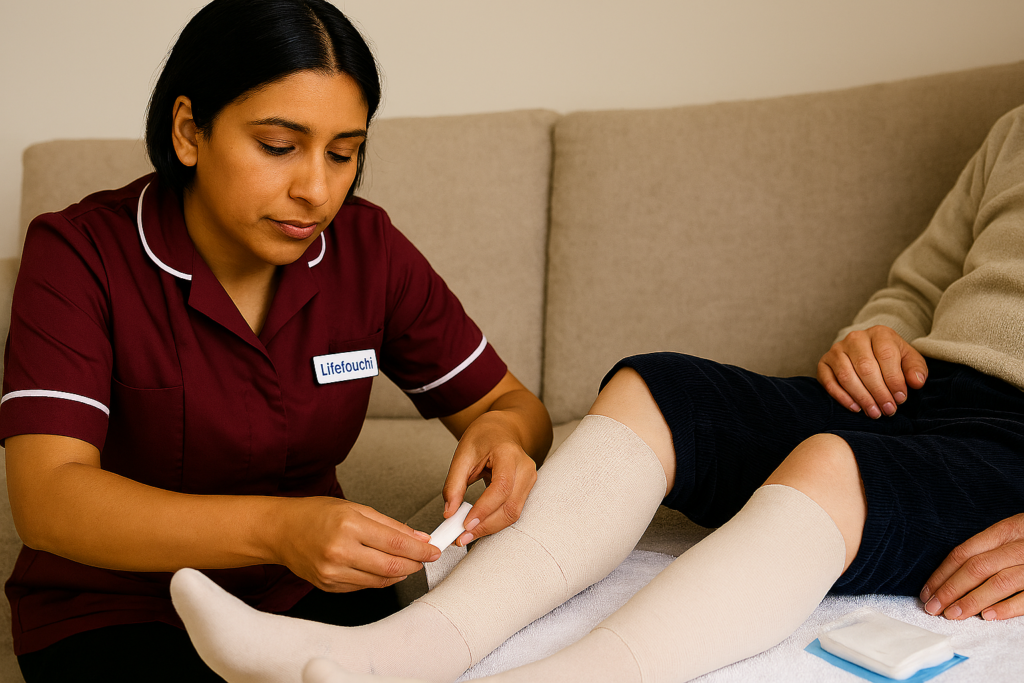
Long‑Term Leg Ulcer Dressing
Lifetouch Care supports people with long‑term leg ulcers by providing structured, consistent dressing care at home. Venous, arterial, and mixed‑aetiology ulcers require accurate diagnosis and tailored treatment. Venous ulcers often benefit from compression therapy when clinically appropriate, while arterial ulcers require careful vascular assessment before compression is considered. Dressing plans focus on managing exudate, protecting peri‑wound skin, and supporting granulation tissue.
- Venous ulcers typically require compression if safe and prescribed.
- Arterial ulcers need gentle handling and specialist oversight.
- Exudate control prevents maceration and infection.
- Regular monitoring identifies pain, odour, or colour changes early.
- Lifetouch nurses coordinate with GPs, tissue viability, and vascular teams when needed.
Diabetic Foot Wounds
Lifetouch Care provides specialist diabetic‑foot wound support at home, where early detection and escalation are critical. These wounds require meticulous assessment due to neuropathy, impaired circulation, and high infection risk. Dressing plans aim to maintain moisture balance, reduce pressure, and protect against trauma. Offloading is often essential to prevent further breakdown.
- Neuropathy means pain may not be a reliable indicator of deterioration.
- Offloading devices or footwear reduce pressure on the wound.
- Blood glucose optimisation supports healing (under medical supervision).
- Early referral to podiatry or tissue viability is often required.
- Lifetouch nurses carry out regular foot checks and educate families on safe foot care.
Vascular Wounds
Lifetouch Care manages vascular wounds at home with gentle handling, close monitoring, and coordinated escalation. Arterial ulcers often present with pain, poor circulation, and fragile tissue. Dressings must be non‑adherent and protective, avoiding trauma during removal. These wounds frequently require multidisciplinary involvement.
- Arterial wounds worsen with pressure or cold.
- Non‑adherent dressings prevent further tissue damage.
- Pain changes may indicate worsening ischaemia.
- Vascular team involvement is often essential.
Lifetouch nurses monitor circulation, limb temperature, and wound progression at each visit.
Post‑Operative Surgical Wound Management
Lifetouch Care supports post‑operative wound management at home, ensuring safe healing after hospital discharge. Surgical wounds require careful observation to ensure healing progresses without infection or dehiscence. Dressings are usually left in place for several days unless saturated or loose.
- Sutures, clips, or glue must be checked for integrity.
- Any new pain, odour, or discharge requires escalation.
- The wound must remain clean and protected from trauma.
- Education helps the person avoid unnecessary touching or moisture.
- Lifetouch nurses monitor for redness, heat, swelling, or separation of wound edges.
Who Needs Daily Dressing Changes
Lifetouch Care provides daily home visits for individuals whose wounds require close monitoring or frequent dressing changes. Daily changes are needed when wounds are unstable, heavily exudating, or at risk of infection. Some individuals also need daily visits due to complex comorbidities or reduced ability to monitor their own wounds safely.
- Heavy exudate requires frequent assessment to prevent leakage.
- Suspected infection needs close monitoring.
- People with diabetes, immunosuppression, or frailty may need daily checks.
- Dressings that lose integrity quickly must be changed more often.
- Lifetouch nurses document changes, escalate concerns, and adjust care plans promptly.
Role of Lifetouch Care’s Complex Nursing Team
Lifetouch Care plays a central role in ensuring that wound care and pressure‑ulcer prevention are delivered safely and consistently in the person’s own home.
- The team provides specialist assessment for complex wounds, including diabetic foot ulcers, vascular wounds, long‑term leg ulcers, and post‑operative surgical wounds.
- Nurses deliver daily or scheduled dressing changes based on clinical need, ensuring continuity and early detection of complications.
- They coordinate with GPs, tissue‑viability nurses, podiatrists, and vascular teams to ensure integrated care.
- They support carers and families with education on repositioning, equipment use, and early warning signs.
- They ensure robust documentation, risk management, and escalation pathways aligned with clinical governance standards.
- They adapt care to non‑clinical home environments, ensuring safety, infection control, and dignity at all times.
How It Work
how your journey starts with Lifetouch Care
Get Started on Your Journey to Better Health
The team provides specialist assessment for complex wounds, including diabetic foot ulcers, vascular wounds, long‑term leg ulcers, and post‑operative surgical wounds.